If history had a heartbeat in Kozhikode (Calicut), it would echo through the narrow lanes of Kuttichira, the cultural cradle of this coastal city. Long before Calicut became a bustling urban centre, it was here along the banks of a serene pond that a remarkable community shaped its identity, prosperity, and spirit of coexistence.
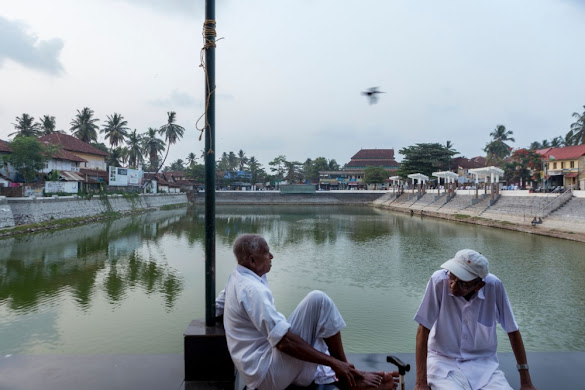
Centuries ago, this area was known as Thekkepuram, home to the Koyas or Mappilas, legendary maritime traders. From these very shores, ships sailed to the Middle East during the glorious era of the Zamorins, carrying spices, textiles, and stories of Malabar. In return came wealth, knowledge, architecture, and a cosmopolitan attitude that still defines Kozhikode. Much of the city’s prosperity can be traced back to the vision, courage, and trade of the Kuttichira people.
The name “Kuttichira” itself comes from the large pond at its heart, ironically named “little pond,” yet it is the widest pond in the city, reflecting the sky, the past, and the life of the community. Around this tranquil waterbody rise elegant ancestral mansions and pandikasalas (traditional warehouse-houses used by traders) living reminders of a golden age.
But the true soul of Kuttichira lies in its three heritage mosques, each with a story breathing through its wooden beams and handcrafted ceilings. These are not just places of worship, they are architectural marvels, blending Kerala style with Arabian influences, built without domes or minarets, yet majestic in silence. Step inside and time seems to slow down. You don’t just see history, you feel it. As you walk through Thekkepuram’s winding streets, children play by the pond, elders exchange stories in shaded verandas, and the call to prayer mingles with sea breeze. There is harmony here of faiths, families, and centuries.
Mishkal Mosque: Where Faith, Timber, and 700 Years of History Stand Tall
Hidden within the heritage rich lanes of Kuttichira in Kozhikode stands a monument that defies every expectation of what a mosque should look like, yet embodies the soul of Malabar’s maritime past. This is Mishkal Mosque, one among the oldest and most unique mosques in India, a 14th-century masterpiece commissioned by the wealthy Arab shipowner Nakhuda Mishkal. From the moment you see it, Mishkal Mosque surprises you. There are no domes, no minarets, no typical Islamic ornamentation. Instead, it rises like an ancient Kerala temple because that was the only architectural blueprint available when it was built. What makes it a mosque is not its form, but its prayers, rituals, Quranic calligraphy, and the faith it has carried for over 700 years.
Built originally as a five-tiered teakwood marvel, the structure was unlike anything Malabar had seen. When most buildings had just one or two floors, Mishkal Mosque touched the skies. But in 1510, the Portuguese attacked and burned the top tier. It was the Zamorin of Calicut who restored it, giving it the four-tier form we see today. Even now, on the third tier, the burn marks remain—a quiet testimony to history’s scars and resilience.
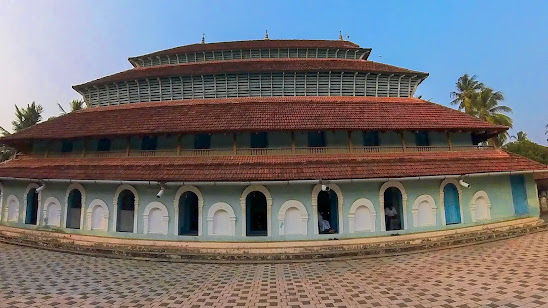
This architectural treasure is built on a massive stone plinth with four steps, 50 majestic teak pillars in a carefully designed pattern stretching 4 floors, over 50 semi-circular arched doors, countless smaller window arches creating an elegant visual rhythm and wide wooden halls that once hosted over 1,000 worshippers.
The ground floor prayer hall holds around 400 people and features stone walls and a serene antechamber. Climb up and the upper tiers reveal vast timber halls, with floors entirely made of wooden planks still strong after centuries. Each tier gently tapers, creating a conical silhouette supported by increasingly smaller pillars, an engineering marvel of its time. The second-floor veranda gives glimpses of the outside world as the sweeping roof extends dramatically beyond the walls. The third and fourth levels feature latticed wooden screens, allowing breeze and filtered daylight to enter to cool, calm, and be timeless.
Inside, history lives in the details with a beautifully carved wooden pulpit with floral designs still used on Fridays for the prayers, the sword of Tipu Sultan which was gifted during his visit and occasionally used by the Kazi for prayers, a timber palanquin (manchal) in which the Kazi once arrived for prayers, an ancient drum beaten for centuries to announce Ramadan which is still loud and sacred.
Above all, the wooden roof on the fourth tier is a masterpiece of traditional timber framing—perhaps the most complex in Malabar. Because of frequent lightning strikes in the past, three of the region’s oldest lightning conductors still stand proudly atop the mosque.
Mishkal Mosque was not just a place of worship, it hosted nikahs (marriage ceremonies) and brought people together in joy and unity. & is a community hub. Today, the mosque is part of the Kuttichira Heritage Project and is carefully maintained. It remains one of the few mosques in India where men of all religions are welcome to enter. However, women may not be allowed inside at all times, so visitors should be respectful and inquire beforehand.
Munchundi Mosque: A Quiet 1,000-Year-Old Treasure of Kozhikode
Tucked away in the streets of Kuttichira, far from the bustle of modern Kozhikode, stands a humble yet extraordinary monument, Munchundi Mosque believed to be one of the oldest mosques in Calicut, dating as far back as the 10th century. Time may have softened its walls, but every beam, carving, and inscription still whispers stories of traders, kings, faith, and cultural harmony.
The name “Munchundi” itself is the first mystery. In the local dialect, it means “junction of three lanes,” referring to the meeting of small streets around the mosque. But local legends offer another version, a wealthy Arab trader named Shadab Al-din Raihan affectionately called Muchiyan is believed to have commissioned the mosque. His name was found on an ancient tablet dating to the 13th century, and even today, his house (Muchintakam) and tomb (Muchiyante Jaram) still stand nearby, anchoring this place in both history and memory. So treasured was this mosque that the Zamorins of Calicut themselves funded its upkeep, a rare honor that shows the deep respect between rulers and the trading community.
Within the mosque compound lies a relic few visitors know about a worn granite tablet inscribed in both Arabic and old Malayalam (Vattezhuthu). Though eroded by time, historians in the 19th century partially deciphered it. It reveals an agreement: revenues from certain lands were assigned for the maintenance of the mosque. The Islamic portion describes a pact between the ruler and the mosque builder proof of how important this mosque was to medieval Calicut’s social fabric. Strangely, this historic tablet is now kept inside the compound of a nearby church, a beautiful symbol of the interwoven faiths of this land.
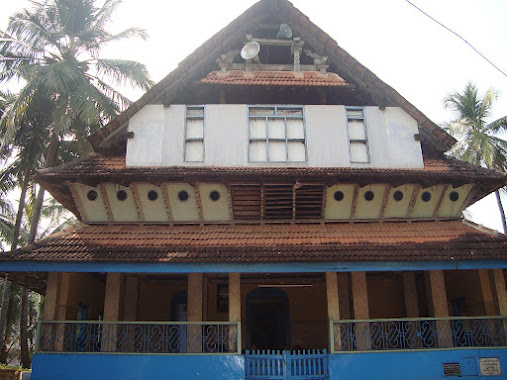
Step inside and you’ll be struck by one thing immediately, this doesn’t look like a traditional mosque because like many coastal mosques built in Kerala centuries ago, it followed the local temple architectural style. There is a 1.5-metre stone plinth raising the structure, a double-tiered sloping roof with decorated gables, teakwood pillars with intricate carvings, floral ceiling patterns, wooden animal carvings rare in Islamic structures, a serene courtyard with elaborate timber work. Despite its Hindu-influenced architecture, Quranic inscriptions inside gently remind visitors of its identity as a mosque.
Unlike most mosques, Munchundi Mosque does not hold the special Friday noon prayers (Jumu’ah), a rare and intriguing distinction. Still, daily prayers and Islamic rituals continue, preserving centuries of devotion. Worship is conducted only on the ground floor, while the second floor remains unused, standing quietly like a forgotten witness to the past. Munchundi Mosque is not grand or loud. It doesn’t tower over the city. It doesn’t glitter with domes or marble. Instead, it stands in silence—ancient, graceful, and incredibly powerful.
It tells the story of traders who built bridges between cultures, king who protected a mosque, craftsmanship where Hindu style met Islamic faith, a community that has cherished it for a thousand years.
Jumayit Palli (Jama Mosque): The Grand Heartbeat of Calicut’s Faith and Architecture
Along the narrow lanes of Kuttichira where ancient mosques rise gracefully beside traditional homes, one structure stands taller, not just in size, but in legacy. This is Jumayit Palli, also known as the Jama Mosque, the largest mosque in Calicut and the first to host Friday Juma prayers in the region. Today it sprawls with grandeur across the landscape, but centuries ago, it started humbly built around the 11th century and constantly expanded by generations of devotees. No one knows exactly who built the original structure, but over 1,000 years of history have shaped it into an architectural masterpiece.
Unlike most heritage mosques, Jama Mosque has only one floor but it can hold over 1,200 worshippers at once! Even more astonishing is the fact that it holds the record for the largest terracotta-tiled single roof in the region. From outside, the vast sloping roof glows gently in the sun, held up by strong timber beams typical of Kuttichira’s traditional construction. Like many ancient mosques of Malabar, this one reflects the architectural influence of Kerala temples, especially from the time of the Zamorins.
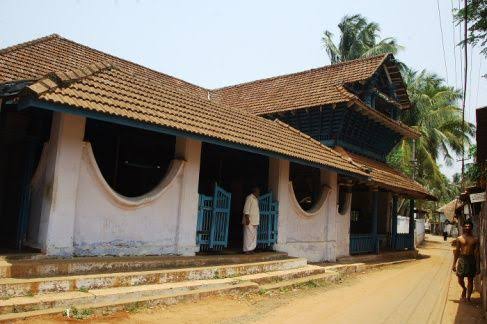
Inside, one can see two open-to-sky courtyards which collect rainwater naturally and bring cool air and light into the prayer halls an ancient environmental design far ahead of its time, doors on all four sides, wooden windows above, and three beautifully crafted timber staircases tell you how deeply wood is woven into its structure, main doorway greets you with polished wooden pillars and a granite threshold, giving a sense of dignity and permanence. The ceiling blooms with carved floral patterns, rare in Islamic architecture of that era. Look around and walls and roof edges are adorned with Quranic verses, blooming into sacred art.
Jama Mosque holds some of the oldest Arabic inscriptions in Kerala, a 15th-century inscription on a wooden lintel in the ante-chamber, written in nakshi script bold, beautiful, and flanked by carved rosettes in square frames. A record from 1480 CE credits Kwaja Badr al-din, son of Al Kanafi, with renovating the mosque. A 1840 CE inscription tells us the mimbar (pulpit) was once painted in gold, imagine the glow during Friday prayers. Another inscription refers to the city as “Kalikut” in Arabic, revealing how Kozhikode was pronounced in the Zamorin era. Every inscription is like a bookmark in the story of time, written in wood and stone.
In the mosque courtyard lies the tomb of Quasi Muhammed, a respected religious figure, making this place not just a center of worship, but of remembrance, scholarship, and community. This isn’t just the largest mosque in Kozhikode, it is the soul of Kuttichira’s Islamic heritage, a symbol of cultural fusion, and a living museum of art, architecture, and devotion.
All the three mosques in the area takes you back centuries and then bring you back to the present creating an easy connection to people around. Nothing much has changed in the way people are and that may be the reason why this place is a heritage in its true sense.
Kuttichira is not just a place to visit, it is a place to listen to the origins of Kozhikode, to the whispers of the Indian Ocean, and to the people who connected worlds.
 STORIES by HEARITAGE
Leave a comment