Perched on a serene hillock at Illikunnu, a quiet suburb of Thalassery, stands a charming colonial-style bungalow that breathes history through every arch and corridor. This is the Herman Gundert Bungalow, a 19th-century residence that once housed one of Kerala’s greatest contributors to language and literature is Dr. Herman Gundert, the German missionary and linguist who gifted Malayalam its first dictionary. As you walk through its wide verandas and spacious halls, you can almost sense the presence of the man who lived and worked here. The soft breeze that passes through the tall wooden doors seems to whisper stories of his tireless work and the love he developed for a language that was not his own.
Born in Stuttgart, Germany, Herman Gundert was a scholar with a remarkable gift for languages. Fluent in Hebrew, Latin, English, and French, he also possessed a passion for music, playing the organ, piano, and violin with ease. Guided by his father’s devotion and the mission of the Basel Evangelical Mission, Gundert made his way to India in 1836. It was during this journey that he met Julie Dubois, who would become his wife and partner in both life and service.
In 1839, the couple reached Thalassery that would become the heart of Gundert’s life’s work & is said to be the place where he lived for over 25 years. Though he came as a missionary, it was his fascination with Malayalam and its people that left an everlasting mark. He immersed himself in local life, learning the nuances of the language and culture with empathy and enthusiasm. His love for local dialect & life of people is clearly seen in his ways of life where he took upon himself to learn the Malayalam language by learning from the Uracheri Gurukkals. His first foray into Malayalam literature is his effort in translating the Bible into Malayalam which was indeed a great feat as it helped the local Christians understand the book better.
Gundert’s contributions went far beyond religion. He launched Kerala’s first Malayalam newspaper, Rajyasamacharam, and later, the magazine Paschimodayam, both of which helped shape early journalism in the region. His monumental works is the first Malayalam Grammar book, “Malayalabhasha Vyakaranam,” and the first Malayalam-English Dictionary laid the foundation for modern Malayalam writing. In fact, it was Gundert who introduced punctuation marks into the language, a detail that revolutionized its written form. During his time at Thalassery, he is said to have published 13 books, all in Malayalam which is indeed a feat to admire, one among them is Pazhancholmala which is a treasure trove of proverbs from local folklore.
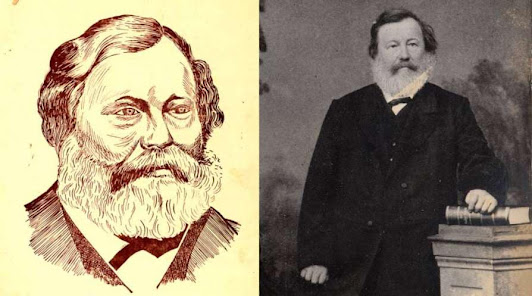
Education, too, was close to his heart. Gundert started a small school right in the verandah of his bungalow, offering lessons to local children. His wife, Julie, founded a girls’ boarding school, a rare and progressive step for the time. Together, they opened several more schools across Thalassery, bringing the light of education to many.
Though Herman Gundert eventually returned to Germany in 1859, the spirit of his work continues to echo through Thalassery’s hills and hearts. The Malayalam dictionary was completed in Germany in the year 1872 as he continued to add words. His bungalow still stands as a symbol of friendship between cultures, a monument to one man’s love for learning and his extraordinary contribution to Kerala’s linguistic heritage.
For a visitor, the Gundert Bungalow today is a world class interactive museum with galleries from his times and his work. The museum is not just a historic site it’s a journey into a story of passion, culture, and connection that transcended borders.
 STORIES by HEARITAGE
Leave a comment