When you travel through Kerala’s serene coastline, from the backwaters to the Arabian Sea you’re not just moving through space, but through centuries of living history. Hidden among fishing villages, bustling ports, coconut groves, and ancient settlements is a route believed to have been walked by one of the twelve Apostles of Jesus St. Thomas, the man credited with bringing Christianity to Indian soil. Legend, ancient records, and enduring faith come together in this remarkable journey known as the Ezharapallikal, the “Seven and a Half Churches” of St. Thomas. These are not mere monuments; they are living testimonies of a man whose travels shaped the spiritual fabric of Kerala.
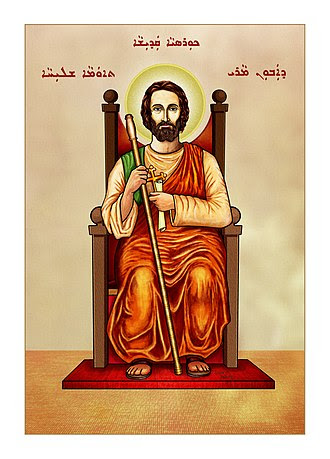
The year was 52 AD and the bustling port of Muzuris today’s Kodungallur was a vibrant crossroads of world trade. Arab merchants bargained in spice-laden warehouses, Chinese ships docked with silk and porcelain, Jewish communities thrived in their ancient enclaves, yet Europe had never touched these shores & this was the time of the arrival of the apostle. Tradition says he quickly learned the local dialect, spoke of Jesus with humility and conviction, and performed miracles that astonished locals. His first followers included Jewish families who had lived in Kerala long before his arrival. St. Thomas didn’t build grand churches, he simply planted crosses of wood or stone, and these humble markers would later grow into churches tended by various congregations of today.
After establishing his first community at Kodungallur, St. Thomas embarked on a journey that today paints a compelling travel trail for any history lover. Sailing south into Pandiyan territory, he reached the ancient port of Kollam. Here, among traders and wandering pilgrims, he continued to baptize and preach. Taking Kerala’s enchanting backwater route, he then arrived at Niranam, a peaceful settlement where he stayed for over a year. Traveling inland, he reached the forested highlands of Nilackal now a quiet pilgrimage site surrounded by hills. Back on the coast, he visited Kokkamangalam, a village shaped by rivers and the rhythm of fishermen’s lives. A small cross he placed here grew into a vibrant Christian community. Further north, at Kottakavu, he set up another early community just before returning once more to Muzuris. His final and perhaps most dramatic Kerala stop was Palayur, where he is believed to have converted a group of Brahmins, an event still preserved in local lore and temple-town architecture. After nearly a decade in Kerala, St. Thomas journeyed across the peninsula to the east coast. But conflict forced him to flee south, arriving at Kanyakumari, where he established what is remembered as his “Arapally” the “Half Church,” marking the end of his Indian west-coast mission. Each church is the story of a man who crossed oceans, won hearts, challenged norms, and left behind more than a religion: he left a legacy of faith, perseverance, dialogue, and cultural harmony.
Kodungallur St. Thomas Church marks the very first place where St. Thomas the Apostle placed a stone cross in AD 52, in a region that then hosted thriving Jewish trading settlements. Kodungallur is one of India’s rare spiritual crossroads where Judaism, Christianity, and later Islam first found their foothold on the subcontinent.
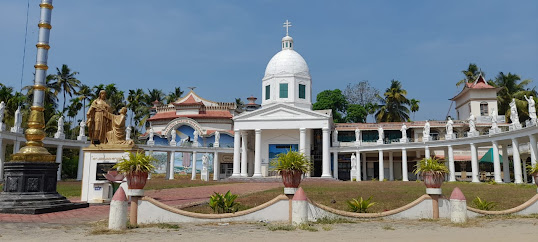
Today, the site is honored as the Marthoma Pontifical Shrine, built by the CMI Congregation in 1953. It also safeguards a precious relic: the right-hand bone of St. Thomas, brought from Ortona, Italy, making it a deeply revered pilgrimage destination. Located near the Azhikode boat jetty, beside serene backwaters, the church’s architecture is inspired by St. Peter’s Basilica in the Vatican. Visitors can also explore a detailed Light & Sound show in the adjoining museum, which narrates the life and mission of St. Thomas.
————————-
After completing his mission in Kodungallur, St. Thomas sailed south to the vibrant port of Kollam, then a major trading hub under the Pandiyan kings. When he arrived around 54 AD, Kollam was a thriving center for cashew trade and home to a large fishing and Chettiar community. Having already heard of the Apostle’s miracles and teachings, the locals welcomed him warmly, and St. Thomas is believed to have baptized nearly 1,400 people during his time here.
Local legends tell of a dramatic incident that further strengthened his reputation. Jealous of his growing influence, some conspired to accuse him of fathering an illegitimate child. Brought before the village council, St. Thomas approached the infant and, in a miraculous moment, asked who the real father was. The child pointed to a man in the crowd, exposing the plot. The confession that followed left the community in awe, deepening their faith in the Apostle.
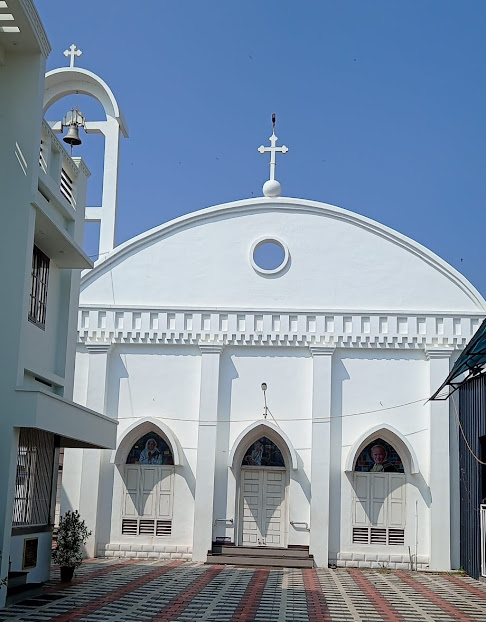
The original church established by St. Thomas in Kollam is said to have been claimed by the sea long ago, with ruins occasionally visible when the waters recede. In its place stands the Church of Our Lady of Purification, belonging to the Latin congregation. Built in the last century, this church is known for its distinct hexagonal façade, lofty roofs, and beautifully adorned altar, making it a striking spiritual landmark on the Kollam coast.
————————-
After a year in Kollam, St. Thomas journeyed north through Kerala’s backwaters and reached Niranam, a region then inhabited mainly by Brahmin and Nair families. Upon his arrival around 54 AD, he baptized two families from each community. Among them was the Pattamukkil Brahmin family, whom the Apostle entrusted with priestly responsibilities when he later departed for Nilackal. Even today, their ancestral homes surround the church, symbolizing a lineage of deep faith and continuity.
Niranam St. Thomas Church is regarded as one of the oldest Christian churches in Kerala, originally founded in 54 AD. Over time, it has undergone several reconstructions, yet precious relics of its history remain. At the entrance stands an 800-year-old granite cross, believed to date back to the 13th century. Its base carries temple-style carvings and faces the waterway through which St. Thomas is said to have arrived. Local tradition adds a miraculous chapter to the church’s origins. After St. Thomas left Niranam, miscreants uprooted the original cross he had placed and threw it into the river. Hearing of this while in Nilackal, the Apostle returned only to find the cross floating downstream. It drifted to the opposite bank, where St. Thomas retrieved and reinstalled it. During his time here, he is believed to have baptized nearly 1,400 people.
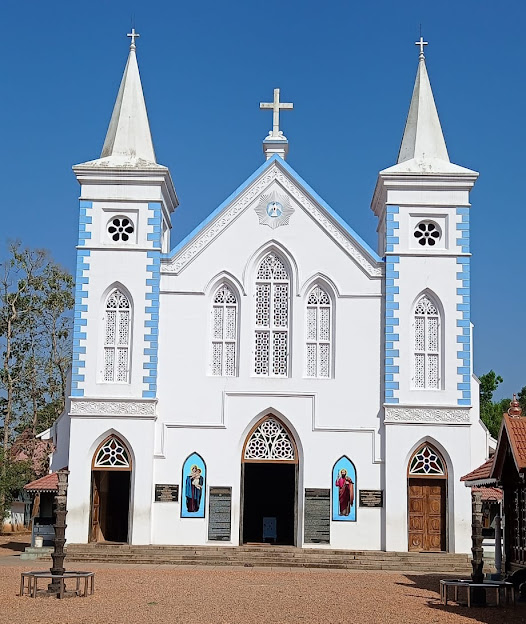
The present-day St. Mary’s Orthodox Syrian Church stands at the spot where the cross was re-established. Renowned for its striking architecture, the church houses five altars, with the main altar dedicated to St. Mary. Meanwhile, the site where St. Thomas first placed the cross is today the location of the beautiful Jerusalem Marthoma Church.
————————-
St. Thomas is believed to have lived for over a year during his Kerala mission in Nilackal known in ancient times as Chayal which was once a thriving center of inland trade, and it is here that surrounded by dense forests was considered part of the legendary Garden of Ayyappa. During his stay, the Apostle is said to have baptized around 1,000 people, forming an early Christian community deep in the highlands. For a brief period, St. Thomas left Nilackal to return to Niranam after hearing that the cross he had placed there had been thrown into the river. When he later traveled north toward Malabar, many of the Nilackal families accompanied him. Over time, the once-flourishing settlement became inaccessible as forests thickened, wildlife increased, and the original church site faded from memory.
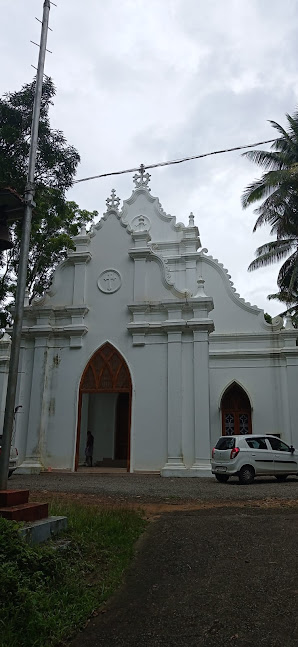
It wasn’t until 1902, during a British hunting expedition, that the remains of the ancient church and nearby houses were rediscovered, bringing Nilackal’s forgotten Christian heritage back into light. In 1957, the Christian communities of the region joined hands to preserve the site as an ecumenical church, honoring all denominations. Today’s St. Thomas Orthodox Church, simple in structure with its characteristic wooden doors, stands as a humble yet powerful reminder of the Apostle’s presence in these forested hills.
————————-
Kokkamangalam once known as Gokkamangalam is one of the few places where St. Thomas is believed to have built a small place of worship himself. Traveling north along Kerala’s backwaters, the Apostle stayed here for over a year and baptized nearly 1,600 people, including members of both the Brahmin and Nair communities. At the heart of this early Christian gathering stood a wooden cross placed by St. Thomas. Local tradition tells a remarkable story about this cross. After St. Thomas left Kokkamangalam, some locals destroyed the little church and cut down the cross, throwing it into the river. But instead of sinking, the cross floated steadily through the backwaters, eluding everyone who searched for it. Eventually, it drifted to the grassy banks of Pallipuram, where a woman cutting grass accidentally struck it with her sickle. To her shock, the cross began to bleed. Frightened, she rushed to the village to report the event, and the community gathered to honor the cross by erecting it in a church near the riverbank.
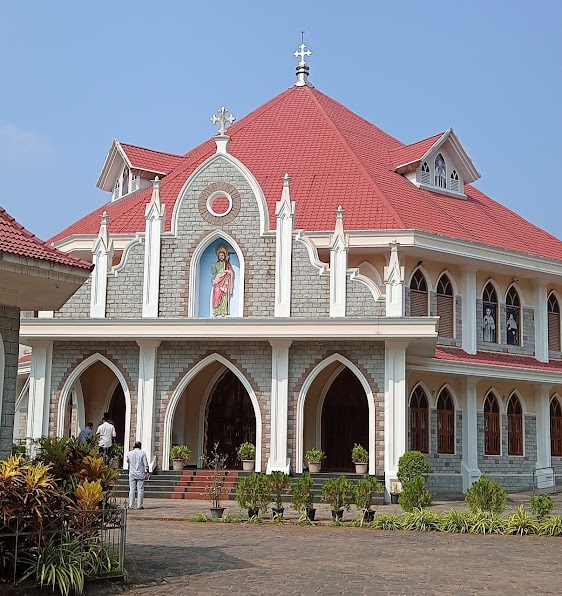
Although the original cross was lost over time, a faithful replica now stands on the banks of Vembanad Lake. Its base features seven faces—six representing the other ancient St. Thomas churches, and the seventh symbolizing the shared faith in Christ. Today’s St. Thomas Syro-Malabar Catholic Church preserves this legacy with devotion. In 1999, the church received a relic of the Apostle, which is displayed with reverence. On the side wall, visitors can see a depiction of the original cross as drawn by St. Thomas, while a seven-tiered lamp placed before the relic symbolizes the unity of the seven Christian communities founded by the Apostle.
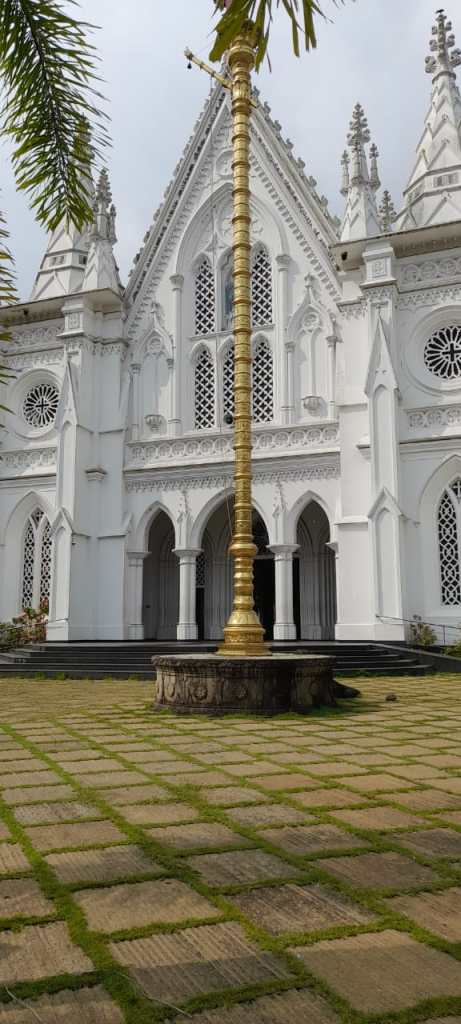
Kottakavu, near present-day Paravur, holds a special place in the journey of St. Thomas. When the Apostle returned to Malabar, the people already familiar with his teachings from his earlier days in Kodungallur welcomed him warmly. It is here that St. Thomas is believed to have erected one of his early wooden crosses, marking the beginning of a vibrant Christian community. Local legend attributes one of St. Thomas’s most dramatic miracles to this place. When the Apostle arrived, a grand Hindu festival was underway, with an idol carried in procession atop an elephant. Some in the crowd recognized him and began to insult him. Seeking divine guidance, St. Thomas prayed—and suddenly a fierce thunderstorm struck. Lightning hit the elephant and the priests leading the procession, causing them to collapse. Realizing the Apostle’s divine authority, the people pleaded for forgiveness. St. Thomas not only forgave them but revived everyone who had fallen. This event, as tradition holds, led the entire procession to embrace Christianity and receive baptism from the Apostle.
Over the centuries, Kottakavu’s early structures faced destruction, especially during Tipu Sultan’s campaigns in Malabar. The original wooden cross carved into rock was also lost. The present St. Thomas Syro-Malabar Churchrebuilt multiple times, stands as a testament to this long history. In 1575, its altar was elevated to the status of a privileged Altar by Pope Gregory. Today, the church’s interiors, marked by elegant Gothic architecture, make it one of the most striking Christian landmarks in the region.
————————-
Palayoor marks the final stop in St. Thomas the Apostle’s decade-long mission along Kerala’s west coast. A prominent Brahmin settlement in ancient times, it is believed to be the last coastal town he visited before traveling east for another decade of evangelization. The present-day church is traditionally considered to be built over an early temple or possibly a Jewish synagogue, highlighting Palayoor’s rich multicultural past.
Local legend preserves one of the most remarkable miracles associated with the Apostle. When St. Thomas arrived, Brahmin priests were performing Pitrpooja, offering water to their ancestors by throwing handfuls into the air. Questioning the ritual, St. Thomas asked why water meant for the gods always fell back to earth. The priests laughed, saying it was the law of nature. The Apostle then prayed to the Holy Trinity, lifted water from the pond, and tossed it skyward where it miraculously remained suspended, while the pond below stayed hollow where the water had been taken. Astonished, the priests sought his blessing, and St. Thomas baptized them with the same water. Of the forty Brahmin families in Palayoor, all but the Orumanayoor family accepted Christianity. According to local belief, the departing Orumanayoor priests cursed the land, giving rise to the name Shapukadu, later known as Chavakkad. Even today, tradition holds that Brahmins do not eat or drink in the vicinity of Palayoor due to this ancient curse.
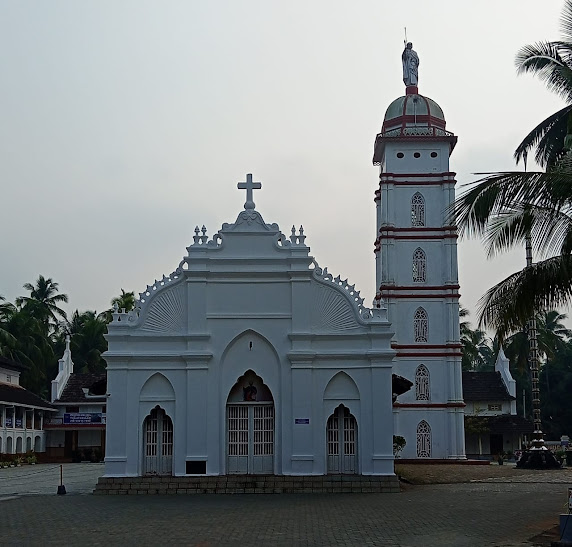
The present Palayoor St. Thomas Apostolic Churchstands on this historic ground. Simple yet distinctive, it incorporates elements of traditional Hindu temple architecture, including a mandapam-style entrance that reflects the cultural blend of the region. Revered as the first place where St. Thomas baptized new believers, Palayoor remains one of the most significant and symbolic early Christian sites in Kerala.
————————-
Thiruvithamcode St. Thomas Church, often called the Arapally or Amalagiri Church, is believed to be the last of the eight churches built by St. Thomas in India. Though “Arapally” translates to “Half Church,” the name actually honours Arachan, the Chera feudal king of southern Travancore who helped construct it. According to tradition, St. Thomas was preaching in Mylapore when he faced hostility and accusations from locals. Forced to flee with 64 families, he travelled south and reached Kanyakumari. There, he is said to have met the famed Tamil poet Thiruvalluvar, who persuaded the local king to offer land and stones for a place of worship. The stones gifted by Arachan still stand as part of the church today. The structure is believed to have been built around 63 AD, though the exact date remains uncertain.
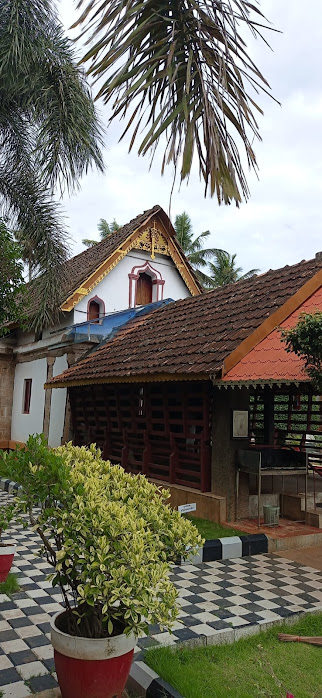
What makes the church truly remarkable is its simplicity and authenticity — it has never been reconstructed. For over two millennia, its original form has remained untouched. Now known as St. Mary’s Orthodox Church, it still preserves the stone crosses attributed to St. Thomas and features an ancient baptismal font placed outside. A humble sanctuary with an extraordinary legacy, this church continues to be a living piece of early Christian history in India.
=============
It is important for every person irrespective of faith to follow the route of St Thomas & visit these churches to believe in human resolve. The apostle true to his word to Jesus spread the word of hope among people in India.
 STORIES by HEARITAGE
Leave a comment