If there is one place every traveler feels drawn to in Kozhikode, it is Mananchira Square a serene pond-turned-urban oasis that has been the city’s heartbeat since the 19th century and is the heart of the city. But behind the calm waters lies a story that stretches back centuries, shaped by kings, conquerors, colonials, and the everyday people of Malabar. Flanked on all sides by important streets and structures, Mananchira is a place for people not just to see but to feel.
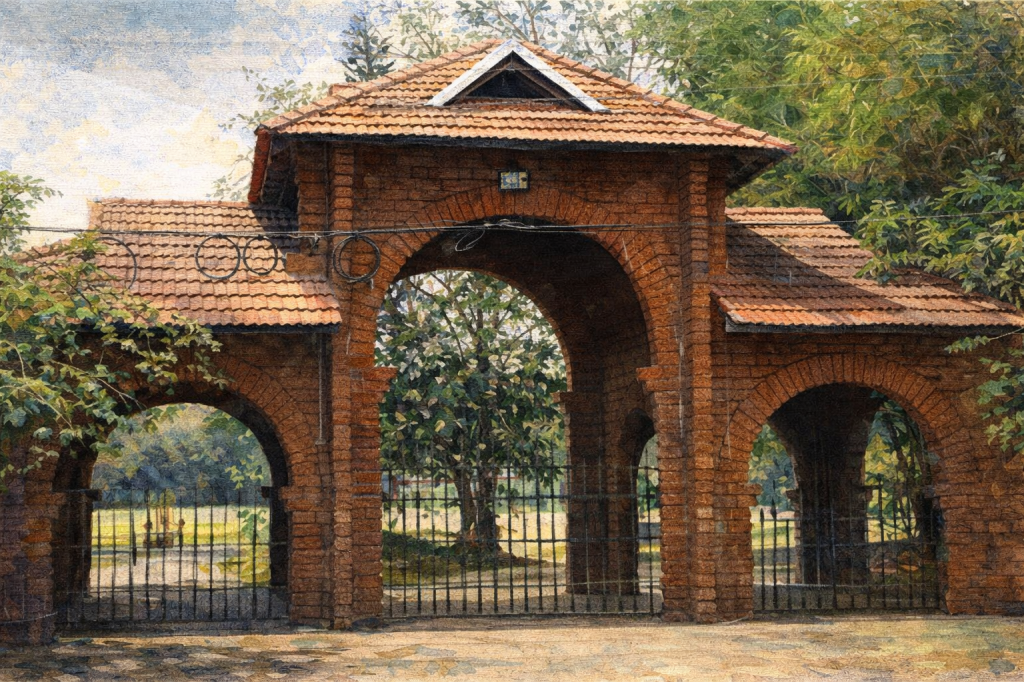
The story begins in the 14th century when Mana Vikraman, the local Zamorin ruler, began excavating laterite stone for a new palace. Instead of a dry pit, a natural spring burst forth from the earth, slowly filling the excavation and gifting Kozhikode the pond that would come to be known as Mananchira literally, the pond of Mana. Initially used as a private bathing area for feudal lords, its purpose transformed dramatically when Tipu Sultan conquered Kozhikode. Recognizing the purity of the spring, he declared it the city’s drinking water source, ensuring its preservation for generations.
As the centuries rolled on, Mananchira evolved with the city. What was once Mananchira Maidan, a vast open ground, became the social playground of the British era Madras Presidency. Government offices and colonial quarters grew around it, and soon the maidan echoed with the sounds of cricket matches, social gatherings, and most famously the circus. In the early 20th century, Malabar’s circus boom brought vibrant tents, acrobats, and animals to the maidan, attracting crowds from across the region. But concerns over hygiene, noise, and the pollution of the precious pond soon forced the authorities to shut the circus down in 1910 to protect the city’s water lifeline. The primary objection was the presence of animals in the maidans which were kept in unhygienic conditions. The Municipal hospital doctors complained of bacteria & flies affecting the patients around, the animals’ sound at night creating problems for people living around in the quarters. The rush of locals & people from all over to see the circus was also a nightmare for the British.
After independence, the maidan became everyone’s backyard with football tournaments, cultural events, community gatherings, and even a refuge for the homeless. Yet, the people of Kozhikode longed to see the historic space restored with dignity. This vision took shape under the then Collector Amitabh Kant, who spearheaded the beautification of the area, converting Mananchira Maidan into the elegantly landscaped Mananchira Square we know today. Religious events like the Ayyappa Vilakku were shifted to nearby Muthalakulam Maidan, ensuring the preservation of this heritage space. The beautification of the place also resulted in the joining Ansari park within the enclosure which made the place bigger & the road more accessible.
Today, Mananchira Square is a peaceful sanctuary in the middle of a bustling city. Its stone walls, canons from Tipu’s era, shaded walkways, and the shimmering pond fed by an ancient spring make it a favorite stop for travelers. Visitors can stroll along the well-lit paths, rest under lush trees, or simply sit by the water absorbing centuries of history reflected in its stillness. The SM Street, Palayam market, the stadium, Comtrust factory, and of course the famous Paragon find their address with Mananchira and it still continues to take people around just like its landscape in Calicut.
 STORIES by HEARITAGE
Leave a comment