If Kozhikode has a pulse, it beats strongest on SM Street traditionally known as Sweet Meat Street, and hailed as one of Kerala’s busiest and most iconic shopping lanes. Step in from the Mananchira entrance and you are greeted by the watchful bronze statue of S. K. Pottekkatt, the celebrated writer who immortalized this bustling stretch in his classic Oru Theruvinte Kadha. It’s only fitting that Pottekkatt didn’t just write about Kozhikode; he lived it, breathed it, and left behind stories woven into every corner of this vibrant street.
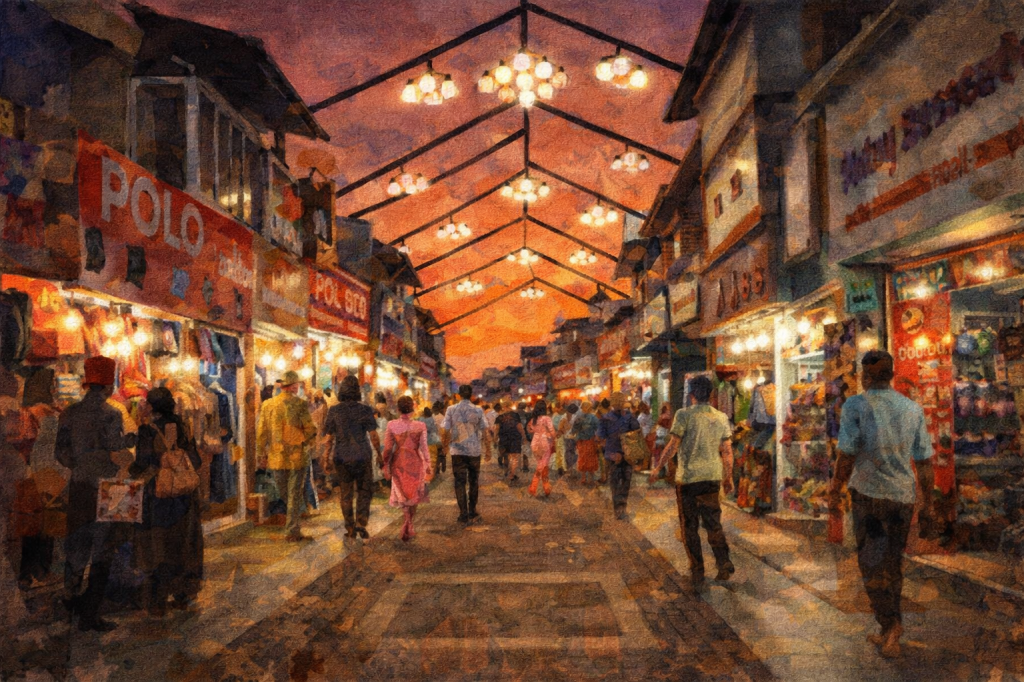
The history of SM Street is as flavorful as the legendary Kozhikodan Halwa sold here for centuries. Long ago, Gujarati traders approached the Zamorin for a place to set up shop, wanting to sell cloth and sweets alongside the Arabs and Zoroastrians who were already thriving in the port town. The Zamorin granted them this very stretch, unknowingly laying the foundation for what would become one of Kerala’s most beloved marketplaces. When the British arrived, they built the Huzur Kacheri, the Collector’s office nearby, and the road became known as Huzur Road. One day, some British officers strolling through the market saw a merchant slicing what looked like slabs of red meat and weighing them on a scale consumed by them gleefully. Only later did they realize it wasn’t meat but glistening, ruby-red halwa. Amused, they named it Sweet Meat Street, a name that stuck and became SM Street.
Time added more layers to the charm. Sankaran Bakery opened in 1933, then Radha Theatre, Kozhikode’s earliest cinema house, opened here in 1937. Old bakeries, classic photo studios, textile shops, and Khadi Emporium flourished. The nearby Town Hall and Public Library became cultural hubs, and SM Street grew into a powerful stage for political protests and Independence-era gatherings.
Today, the street has changed with the times, yet its spirit remains unmistakably Kozhikode. Many old halwa shops have given way to textiles, footwear, electronics, toys, fancy stores, and eateries. But look closely and you’ll still find traditional merchants selling records, vintage cameras, and antiques tucked between modern storefronts. The smell of fresh banana chips floats in the air, and a slab of Kozhikodan Halwa still finds its way into most shoppers’ bags. The SM street today is a place where shoppers can buy anything or even pawn items. The shoes, watches, handicrafts, accessories, apparels all find a place in this street. The shoppers here also have an unique identity with their craft of calling out shoppers, sometimes teasing, sometimes amusing.
SM Street has now been declared a pedestrian-only Walking Street as part of heritage conservation efforts. This makes the experience even richer no honking vehicles, just the hum of shoppers, the clatter of storefronts, and the timeless rhythm of a bazaar that has lived through kings, colonials, artists, and rebels. The street is not just a place to buy but also a place where you can visit the only Parsi Anjuman in Kerala, pray at the Hanuman temple, try the best vegetarian food at AryaBhawan, enjoy a good lunch at Topform or just sit around and admire how time passes in this street.
Walk its length and breadth, and you realize a simple truth: If it exists, you can buy it here.
And if it doesn’t someone on SM Street will still find it for you.
 STORIES by HEARITAGE
Leave a comment