In the bustling heart of Palakkad town stands a quiet structure of history, centuries-old Jain temple believed to have been built nearly 500 years ago. Once the spiritual centre of a thriving Jain community of about 400 families, this sacred space still carries the echoes of an era when Jainism flourished across the region. Over time, as the community diminished, the temple slipped into neglect, but today it has been lovingly revived by the Digambara Basti Trust, with a few Jain families still remaining connected to its heritage.
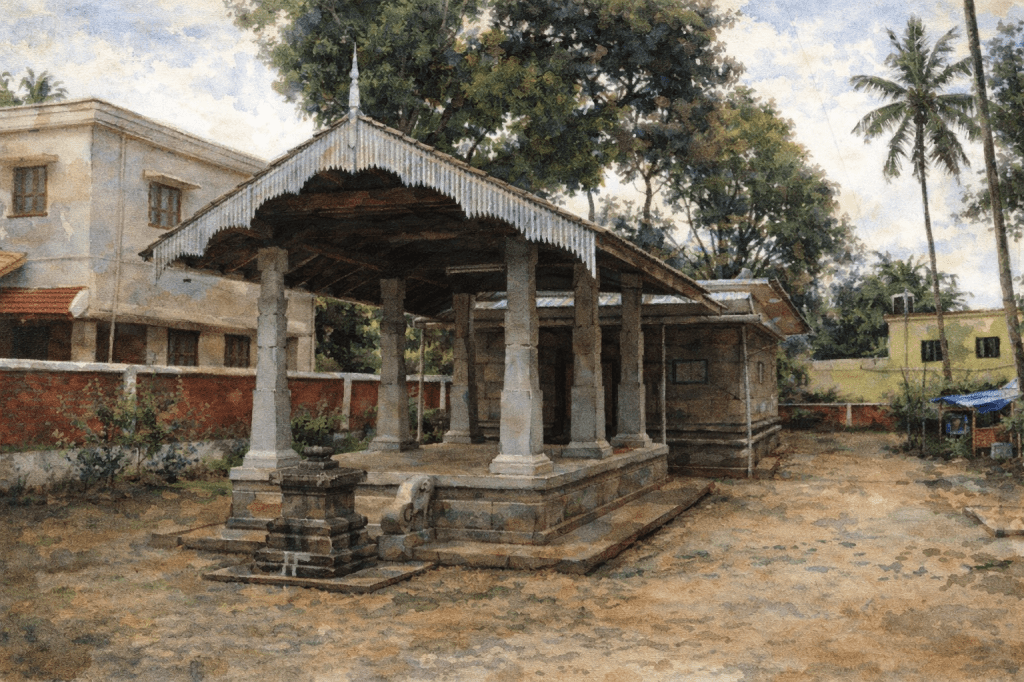
Built by the Jain head Inchanna Satur, the temple is dedicated to the revered Tirthankars and crafted by skilled diamond traders who arrived from Karnataka. Its architecture reflects the simplicity and purity central to Jain philosophy with high granite walls, stone divisions known as aras, and a layout that radiates austerity.
The first ara enshrines Chandranthan, the second houses Vijayalakshmi and Jwalamohini, the third is devoted to Rishabhanathan, and the fourth holds idols of Parshwanath with Padmavathi.
Unlike many Kerala temples rich in woodwork and carvings, this shrine stands unadorned, echoing the calm and contemplative spirit of Jain worship with photos of the Thirthankars. The raised stone mukhamandapam at the front now roofed and supported by sturdy stone pillars adds a serene charm to the space.
Beyond its architectural and spiritual value, the temple is deeply tied to Kerala’s literary history. It was in a Jain home near this temple that the legendary Malayalam poet Kumaran Asan penned his iconic poem “Veenapoovu” (The Fallen Flower). Asan, during his travels, witnessed a flower drifting to the ground during an evening stroll — a simple sight that inspired a profound meditation on life, decay, and the futility of worldly pursuits. Beginning with “Ha” and ending with “Kashtam”, the poem stands as a philosophical reflection on the impermanence of existence.
Today, the Palakkad Jain Temple remains open to all, its daily pujas and annual festival drawing devotees, travellers, and heritage lovers alike. Stepping into this tranquil space is like entering a forgotten chapter of Kerala’s cultural tapestry — one where spirituality, history, and literature meet in quiet harmony.
 STORIES by HEARITAGE
Leave a comment