If you are someone who grew up on Malayalam cinema, chances are you have already “visited” Varikkassery Mana, at least on screen. This graceful heritage house, over a century old, has appeared in countless films, becoming one of the most recognized and beloved ancestral homes in Kerala and still continues to grace the screen. But nothing compares to standing before it in real life, feeling its quiet majesty rise from the small, serene village of Manissery near Ottapalam in Palakkad district.
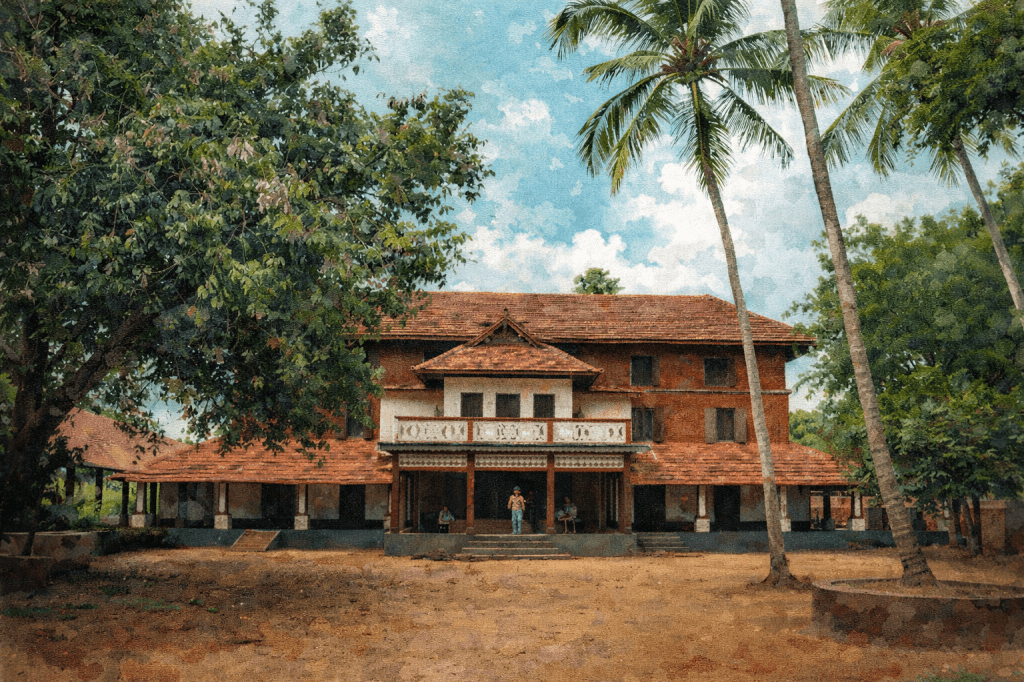
When you arrive, you will first notice is how different it looks from traditional Kerala homes. The arches curve like those of colonial mansions, and tall pillars stand elegantly as if frozen in time. This blend is no accident, designed in 1902 by the legendary architect Krishnan Thampuran, also known as Shilpi Thampuran, the house reflects his exposure to European architectural styles during his time in Madras. Commissioned by Ravi Namboothiripad of the 1000-year-old Varikkassery lineage, the Mana was once known as Varikumcherry Mana and is one among the prestigious Ashtagruha Namboothiri families who settled here under the patronage of the Zamorins.
Walking through the grand portico, you feel as if you’re stepping into a film set because in many ways, you are. The carved wooden doorway opens to a living space that leads into one of the most impressive nalukettus you have ever seen. Perfectly square, unusually large, and surrounded by wide verandas once used for cultural performances, the central courtyard hosts a serene tulsi thara. Light filters through the open roof, filling the space with a soft, timeless glow.
From here, the Mana unfolds like a labyrinth of stories with around 70 rooms spread through three tiers, each whispering memories of aristocratic life. Wide halls, narrow wooden staircases, paneled ceilings, and intricately carved pillars guide you across the centuries. The ootupura (dining hall) and sprawling kitchen hint at the grand scale of community life the Mana once supported. Beside it lies a deep, wide well that supplied water to the entire household. Within the Mana’s compound is the serene kudumbakshethram, home to deities Lord Krishna, Lord Shiva, and Ayyappa. And then there is the picturesque temple pond, bordered by stone steps and bathing areas, an iconic backdrop for many unforgettable movie moments.
Another highlight is the Pathayapura next to the main structure, often celebrated in cinema as the “guest house.” The lower floor, constructed fully of teakwood, once stored food grains for both family and villagers. Climb to the upper floor and you find yourself in an arched veranda opening to a long gallery with spaces where men once rested and where directors today find perfect frames for storytelling.
Today, Varikkassery Mana is cared for by a family trust and is open to visitors whenever filming schedules allow. As you wander through its verandas, climb the narrow staircases, or simply sit beside the temple pond, you can’t help but feel like a part of a film yourself. Every corner here is a story, and every frame a memory preserved in stone and wood. When you visit Varikkassery Mana, you don’t just explore a heritage home but you walk through the heart of Malayalam cinema and centuries of Kerala’s cultural legacy.
 STORIES by HEARITAGE
Leave a comment