Set against the gentle foothills of the Western Ghats, Malampuzha is where innovation meets imagination. Home to Kerala’s longest dam, South India’s only rock-cut garden, an exhilarating ropeway, and one of the most talked-about sculptures in the state, this destination offers travellers a rare mix of engineering marvels, scenic beauty and cultural stories that stay with you long after you leave.
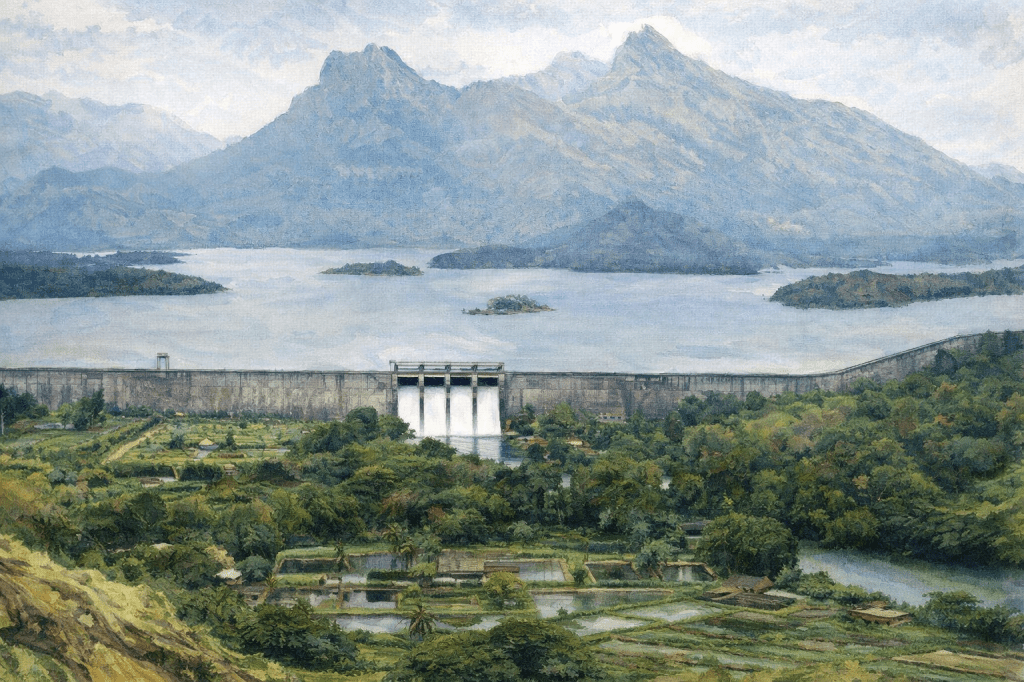
The story of Malampuzha begins in 1949, when the then Madras Presidency decided to construct a major irrigation project along the Malampuzha River. The vision was bold to turn Palakkad’s farmlands fertile and secure drinking water for its people. Completed in record time and inaugurated by Chief Minister K. Kamaraj, this massive structure of masonry and earthwork soon became the lifeline of the region. After the formation of Kerala state in 1956, Malampuzha became a proud symbol of progress and self-reliance. Today, the reservoir quenches the thirst of Palakkad town and neighbouring panchayats while its calm waters host boating for tourists. And at sunset, when the sky blushes over the long walkway atop the dam, you understand why this place draws visitors in droves.
The lush Malampuzha Gardens were developed later to welcome travellers, transforming the utilitarian dam into a complete leisure destination. Spread across vast manicured lawns, the gardens offer something for everyone families, couples, photography lovers, and those who simply crave a serene day outdoors. Two hanging bridges stretch across the central canal, offering stunning views of the dam and the surrounding hills. Many Malayalam films have captured their scenes here, adding a cinematic charm to the place. But the star attraction inside the garden is undoubtedly the Rock Garden, the only one of its kind in South India. Built using recycled and discarded items like broken bangles, tiles, bottles, plastic pieces, it stands as a tribute to creativity and sustainable art. Every nook feels like an unexpected discovery.
But if you are in Malampuzha, there’s one experience every traveller must try, it’s the Malampuzha Ropeway, opened in 1991, the first in South India. Unlike regular cable cars, these two-seater pods are open at the bottom, giving you the thrilling sensation of dangling feet as you glide over the dam, gardens and water. The 2-km aerial journey offers uninterrupted panoramic views, the kind you can’t capture anywhere else in Kerala. It’s exciting, a little nerve-tingling, and absolutely unforgettable.
No visit to Malampuzha is complete without meeting its most iconic resident, the Yakshi. Sculpted by the legendary artist Kanayi Kunhiraman, this larger-than-life cement sculpture is both bold and breathtaking. What many travellers don’t realise is that behind its beauty lies a dramatic story. In the 1960s, when the Irrigation Department planned a sculpture to attract visitors, young Kanayi fresh from fine arts training proposed a revolutionary idea: a sensuous, free-standing female figure inspired by the mythical Yakshi. This was unheard of in Kerala, where sculptures were usually confined to temple settings. As the form took shape, protests erupted. Locals objected. Women marched. Court cases were filed. Kanayi was even attacked on a bus by those who wanted the work stopped. But the artist persisted.
Despite setbacks, accusations, lack of funding and immense social pressure, he completed the sculpture in 1971. The result was astonishing, a Yakshi reclining in a posture of sensual grace, not vulgarity, captured in a moment of awakening as she stretches and brushes back her hair. The proportions were so perfect that many assumed he used a live model, which Kanayi strongly denied. Years later, he restored the sculpture himself, giving it the sleek black finish it has today.
More than 50 years since its completion, Malampuzha continues to be the heart of tourism in Palakkad, a place where engineering brilliance blends effortlessly with nature, art and adventure. Whether you’re walking along the mighty dam, admiring recycled wonders in the Rock Garden, soaring on the ropeway, or simply sitting under a tree watching families enjoy the day at Malampuzha feels timeless. It has grown, evolved, been debated, celebrated and rediscovered, yet it still retains the same magic that first drew visitors decades ago.
 STORIES by HEARITAGE
Leave a comment