The Hosdurg Fort also known as the Kanhangad Fort stands as one of North Kerala’s most impressive yet lesser-explored historic marvels. Flanked on three sides by the bustling town of Kanhangad, the serene Talapady River, and the distant whisper of the Arabian Sea, the fort commands attention from afar, particularly with its distinctive round bastions. Its very name hints at its origins: Hosdurg in Tulu means New Fort, a clue to its strategic significance in a region dotted with ancient strongholds.
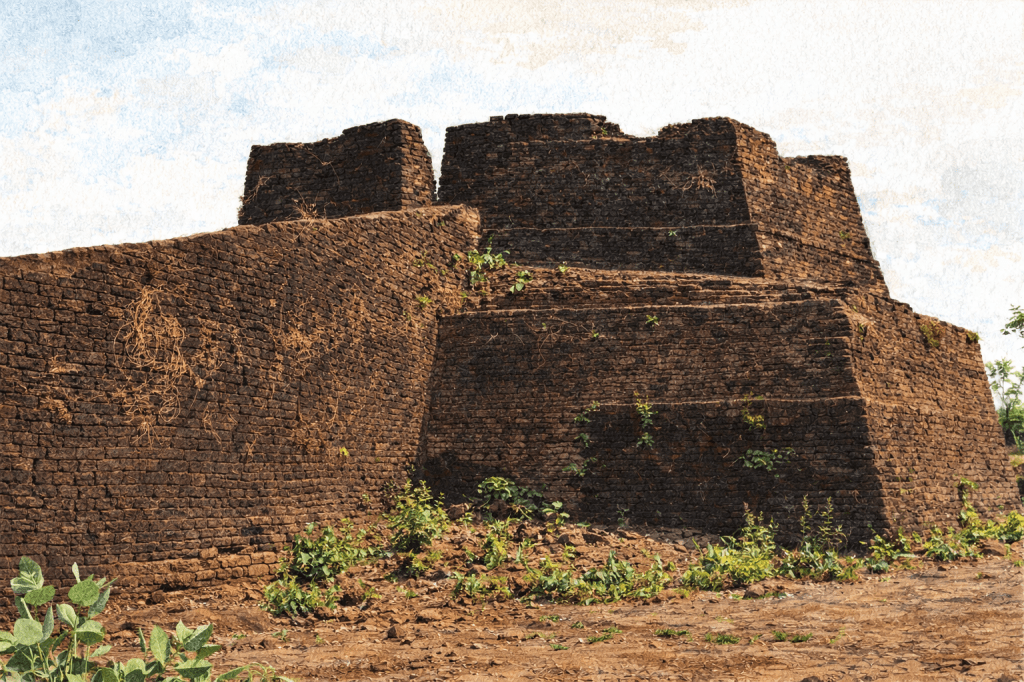
Built in 1733, the fort is the brainchild of Somasekhara Nayak who is one of the most celebrated fort builders in Indian history during the rule of the Ikkeri dynasty. After the decline of the Vijayanagara Empire, the Nayaks came into prominence, extending their influence over Northern Tulu lands and moving south toward present-day Kerala. The Kolathiri chieftains dominated the northern Malabar region, but with the rise of the Ikkeri rulers, the political landscape shifted. Trade became the heart of their strategy. The Malabar Coast was bustling with Dutch, Arab, and local merchants drawn by the irresistible pull of spices. To protect these lucrative trade networks and ensure the secure storage of precious goods, a powerful garrison was needed. Hosdurg Fort, with its ideal placement between river and sea, became the perfect sentinel guarding the flow of commerce.
Unlike many forts in Kerala, Hosdurg boasts a distinctive Dravidian architectural layout. Built using clay bricks sourced from the nearby Western Ghats, the fort’s structure was intentionally designed to absorb cannonball shock, an innovation that ensured its resilience during military conflict. The clay, over time, fused with the region’s natural vegetation; mosses, fungi, and creeping plants tightened their grip on the walls, further strengthening the structure rather than weakening it. The large compound inside the fort is a testament to its role as a military garrison, complete with watchtowers that once scanned the horizon for enemy ships or approaching forces. Hidden caves, secret tunnels, and ancient canals snake beneath the surface, whispering stories of espionage and escape routes used during the fort’s peak years. Though many of these passages are now inaccessible, they add to the fort’s air of mystery and grandeur.
For decades, Hosdurg Fort lay forgotten, overshadowed by its more famous neighbor, the Bekal Fort, which charms travelers with its sweeping ocean views. After the Ikkeri dynasty fell and Mysore’s rulers gained control, the fort served mostly as a resting quarters for troops. Slowly, vegetation took over, and the structure faded from public memory. But heritage, like history, always finds a way to rise again. Visitors can once more admire the massive bastions, explore remnants of ancient walls, and trace footsteps left behind by merchants, rulers, and warriors. The fort’s proximity to the renowned Nithyananda Ashram has also revived footfall, bringing pilgrims and tourists alike to marvel at its enduring presence.
Visiting Hosdurg Fort feels like stepping into a forgotten chapter of Kerala’s history. As the wind brushes past the weathered laterite blocks and sunlight dances upon the contours of the ancient bastions, you cannot help but admire the fort’s resilience. It stands not merely as a relic, but as a proud reminder of a bygone era when trade routes shaped kingdoms and fortifications determined the fate of empires. Its walls may be silent, but they speak volumes to those willing to listen.
 STORIES by HEARITAGE
Leave a comment