Journeying through the emerald landscapes of North Kerala, one often finds stories far older than time itself. Among them is the compelling legend of Vettakorumakan, a deity unknown to the mythological traditions of North India but deeply revered across Malabar and parts of Tamil Nadu. His story is woven into the very soil of this land, making a visit to his shrines not just a pilgrimage but a portal into an age-old cultural memory.
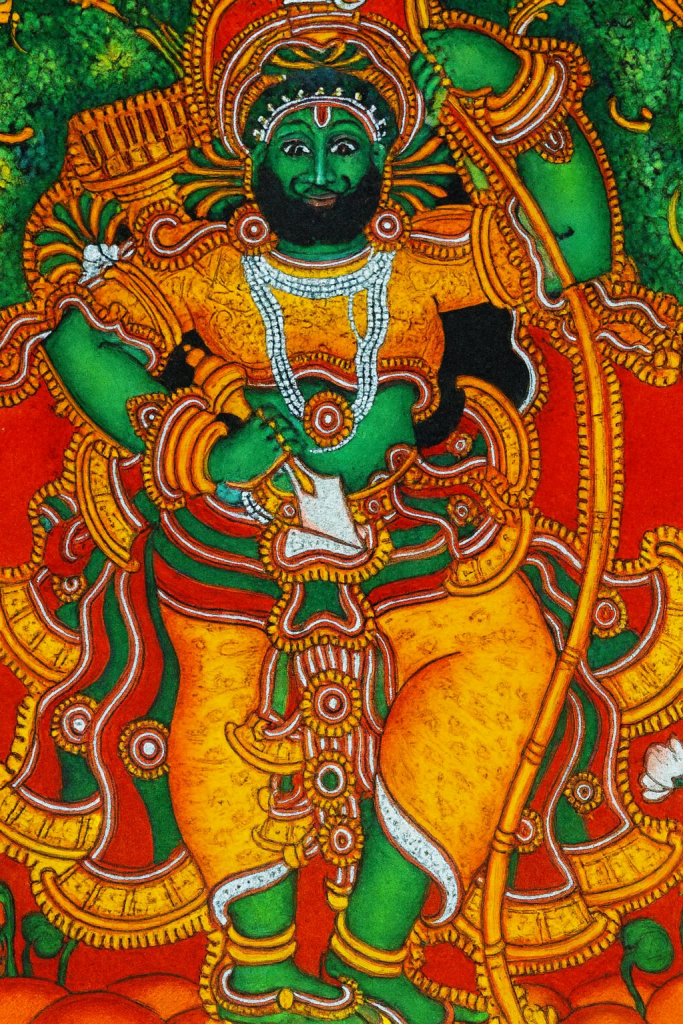
The tale of Vettakorumakan begins in the times of the Mahabharata, during the exile of the Pandavas. When Lord Krishna urged Arjuna to acquire the fearsome Pashupatastra from Lord Shiva, Arjuna retreated to the Himalayas for severe penance. However, as happens in many divine stories, the path to greatness demanded humility. Lord Shiva, disguised as Kiratha, a tribal hunter, along with Goddess Parvathi as Kirathi, staged a divine test. A wild boar was sent to disrupt Arjuna’s meditation. Arjuna in anger used his Gandiva to kill the boar but at the same time Kiratha’s also struck the boar. This sparked an argument with both that escalated into an intense duel. It was only when Arjuna’s arrows transformed into flowers through the grace of Parvathi that he realised he was confronting the very Lord Shiva he worshipped. Pleased with Arjuna’s valour and surrender, Shiva blessed him with the weapon he desired. Yet, the divine couple remained in their hunter form for some time and it is from this interim life in the forest that the legend of Vettakorumakan, their divine child, begins.
Left to grow amidst the forests, Vettakorumakan became a fearless hunter but mischievous, mighty, and untamed. Though he destroyed evil beings, his wild energy sometimes unsettled sages and ascetics. Seeking help, they approached the Trimurti. Brahma refused. Shiva only laughed, dismissing it as the natural playfulness of a divine child. Vishnu, however, intervened and disguised as an aged hunter, he appeared before the boy with a dazzling golden churika (dagger). Mesmerised, Vettakorumakan desired it, and Vishnu agreed on one condition. The boy must vow never to harm a pure soul. Thus, the churika became the symbol of his divine mission. Soon after, Lord Shiva guided him to journey southward to rid people of darkness and evil. Obedient and eager, the hunter-child travelled through dense forests and rugged mountains, finally arriving in Malabar, where his legend took root.
The royal families of Chirakkal, Neeleswaram, and Kottakkal embraced Vettakorumakan as their family deity, invoking his protection before battles. His first halt is believed to be in Balussery, where a revered shrine still welcomes devotees. But the most significant abode of the deity stands near the flowing Chaliyar River, in the serene town of Nilambur, close to the historic Nilambur Kovilakam. It is here that Vettakorumakan is said to have halted his divine journey upon the request of the Raja, giving the region the spiritual privilege of housing his most important shrine. Stepping into the temple feels like entering a story etched into stone and soul. The sanctum displays the deity in his resplendent form bearing a humble bow and the golden churika gifted by the gods. The temple walls carry exquisite murals, their colours whispering centuries-old tales.
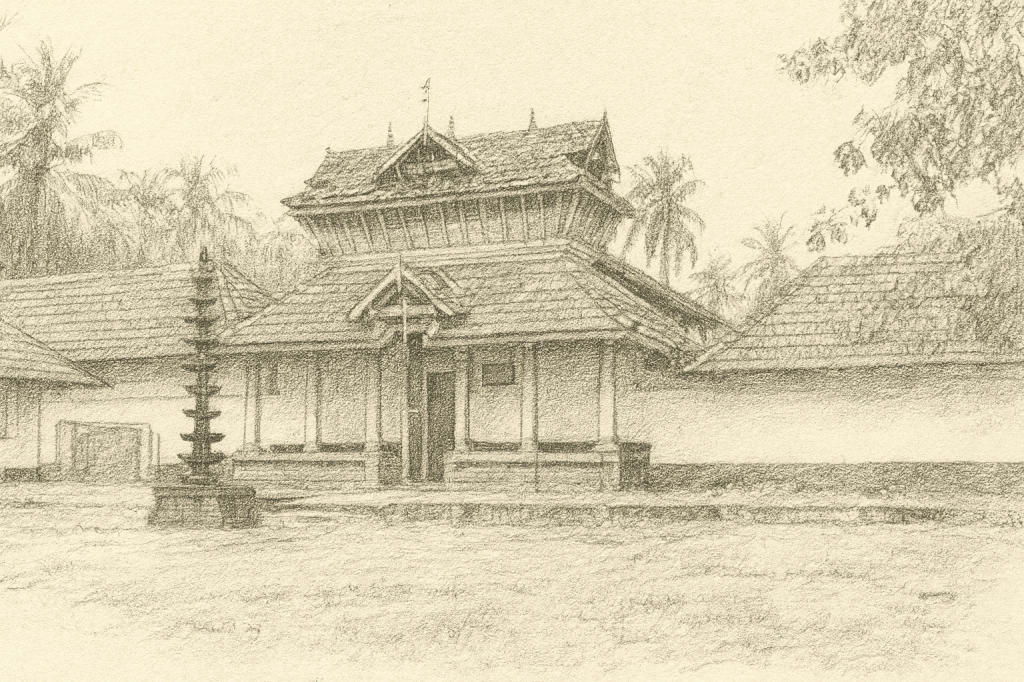
One of the most poignant experiences at Balussery & Nilambur is the Pattu Utsavam, a six-day annual festival that reverberates with devotion and heritage. The Kuruppanmar, a tribal community believed to be descendants of the deity’s earliest followers, sing ancient hymns detailing the valour and grace of Vettakorumakan. Their voices, rich with emotion, echo through the Kovilakam, creating an atmosphere steeped in spirituality and tradition.
For visitors and pilgrims, the journey to Vettakorumakan’s sacred spaces is more than just a physical voyage. It is a passage into the mythic consciousness of Malabar, a place where faith, folklore, and history coalesce seamlessly. Unlike many widely popular deities, Vettakorumakan exists almost exclusively in the cultural memory of Kerala’s northern belt, making his worship deeply local yet profoundly meaningful. Here, devotion is not loud but intimate, nurtured by generations who saw the deity as a warrior against evil, a guardian of forests, and a companion in difficult times.
 STORIES by HEARITAGE
Leave a comment