A pilgrimage is often described as a journey of the soul & an opportunity to walk away from the burdens of life and toward the embrace of the divine. In the mist-laden hills of Vagamon lies Kurisumala, the Hill of the Cross, where for more than sixty years pilgrims have climbed the rugged slopes in prayer, remembrance, and spiritual renewal. What makes this journey extraordinary is not just the path itself, but the deep sense of surrender with which devotees undertake it carrying small wooden crosses, chanting prayers, and pausing at various points to reflect on the Stations of the Cross, mirroring the final journey of Christ to Golgotha.
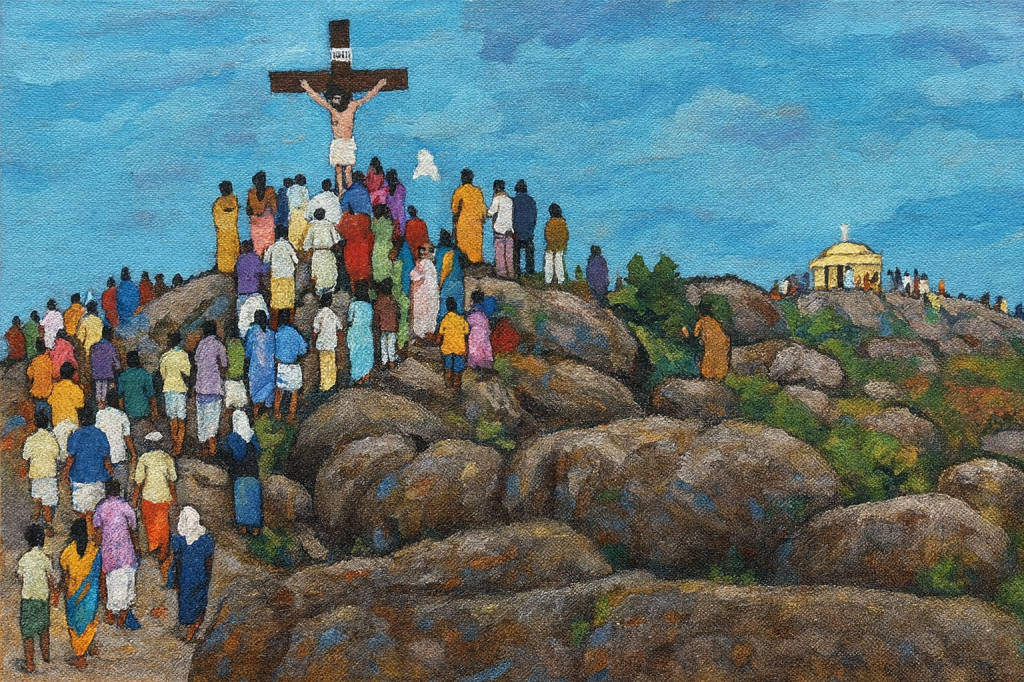
The landscape that now receives lakhs of pilgrims each year was once an infertile rocky plateau, a remote and forgotten stretch of land where two humble farmers, George and Esthron, lived in a small cave from 1940 onward. Their faith-filled lives and the miracles they witnessed laid the silent foundation of devotion on this mount. Yet the true spiritual spark that shaped Kurisumala came years later.
In 1956, the Bishop of Thiruvalla extended an invitation to Fr. Francis Mahieu, a Trappist monk from Belgium, to establish a monastic community in Kerala. Along with another monk, Fr. Bede Griffiths, he founded an ashram in Thiruvalla, embracing the contemplative life of prayer, simplicity, and brotherhood. This was followed by a transformative moment in 1957 when Brother John Baptist, another Belgian missionary, climbed the barren hill with parishioners and erected the first wooden cross at its summit. That simple wooden symbol would change the fate of the hill forever. Recognizing the spiritual value of this mount, Acharya Francis and two seminarians moved to Kurisumala, living in a hut of bamboo leaves and mud at the hilltop. With no amenities, they led an austere, prayer-centric life, walking down the harsh slopes for water and scavenging for food. Their unwavering devotion established the heartbeat of monastic tradition at this sacred place.
The monks soon founded the Kurisumala Ashram, a serene spiritual refuge where the rhythms of life follow the ancient traditions of Christian monasticism. Central to their ashram was a dairy farm, which continues to support the community. The monks live in simplicity renouncing worldly comforts, possessions, and desires to seek Christ with an undivided heart. Yet their purpose extends beyond solitude; they remain committed to uplifting everyone who seeks guidance, comfort, or a moment of stillness.
Today, Kurisumala stands as a symbol of devotion and endurance. The original wooden cross, weathered by the unforgiving climate, has been replaced with a solid concrete cross, and carved steps now guide pilgrims toward the summit. But the essence of the pilgrimage remains unchanged. As pilgrims climb, breath steadying, hearts softening they feel the same raw grace that early seekers experienced decades ago. Reaching the summit, one is greeted by more than a monument, it is a moment of spiritual clarity. The sweeping views of Vagamon’s hills, the fluttering of colorful attire, the echo of prayers carried by the wind all merge into a profound sense of peace.
To undertake the Kurisumala pilgrimage is to step into a timeless tradition of faith and introspection. Whether one seeks healing, purpose, or simply a connection to something greater, the ascent up this sacred hill offers a chance to leave behind the weight of personal sorrows and rediscover the quiet strength within. Once in a lifetime, every pilgrim regardless of faith should walk the path to Kurisumala and experience the way of Christ in its purest, most humbling form.
 STORIES by HEARITAGE
Leave a comment