On the serene banks of the Achankovil River stands the Pandalam Palace & a place where history, devotion, and myth blend seamlessly into one unforgettable experience. For thousands of pilgrims making the sacred journey to Sabarimala, this palace is more than a stopover; it is a spiritual milestone. It is here that Lord Ayyappa, the beloved Manikandan, is believed to have spent his childhood, and it is from here that the revered Thiruvabharanam, the divine ornaments begin their majestic procession to Sabarimala each Makara Vilakku season.
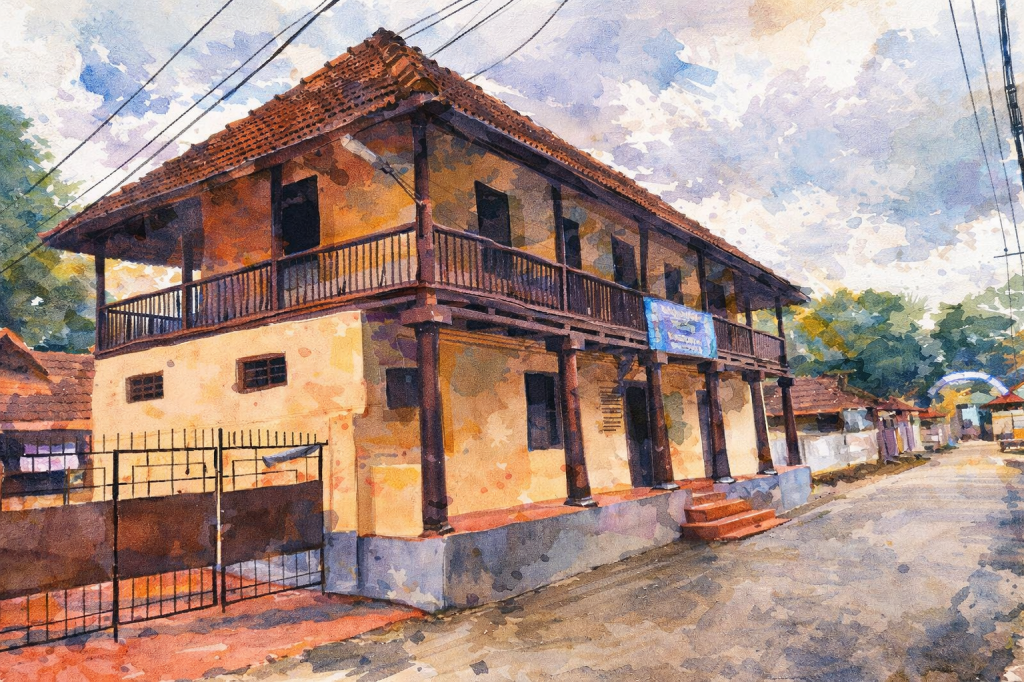
Though time has stripped away portions of the original palace complex due to familial divisions and the passage of centuries, the structures that remain still whisper tales from a glorious past. The Valiya Koyikkal Temple, the ancient Thevarappuras, the Scrambickal Palace that safeguards Ayyappa’s ornaments, and the Puthenkoikal all preserve the soul of Pandalam’s legacy.
The story of the Pandalam royal family begins far away in the ancient kingdom of the Pandyas. As political conflicts and invasions shook their homeland, a branch of the dynasty fled southward in the 12th century. Welcomed by the rulers of Venad, they eventually settled in the region that came to be known as Pandalam around 1194 CE. What followed was a period of peaceful rule marked by an uncommon acceptance of all religions. The Pandya-descended rulers supported the building of mosques, temples, and churches, earning respect across all communities. Their kingdom spread across hills and forests including the mystical slopes of Sabarimala. The Pandalam kingdom maintained cordial ties with the Venad and later Travancore rulers. But when Travancore strengthened under Marthanda Varma, it annexed many smaller kingdoms. Though Pandalam was initially left independent because of this longstanding friendship, mounting war expenses eventually forced the family to concede administrative control. By 1820, Pandalam was fully merged with Travancore, and the palace lost political authority, retaining only its ceremonial guardianship of Sabarimala.
The heart of Pandalam’s charm lies in the legend of Lord Ayyappa. According to tradition, King Raja Rajasekhara, the ruler of Pandalam and a man of deep devotion, found a radiant infant in the forest during a hunting expedition. The baby wore a small bell thus the name Manikandan. The divine child grew up in the Pandalam Palace, playing in its courtyards, studying in its halls, and slowly revealing miraculous abilities that left the kingdom in awe. When His dharma on earth called Him to the forests of Sabarimala, the king built the Valiya Koyikkal Temple in remembrance and placed a sacred Salagramam from Sabarimala as the idol. This palace, therefore, is not merely an architectural structure but it is considered the earthly home of Lord Ayyappa.
The palace structures are built in the traditional Kerala style, modest yet deeply functional, using a blend of mud, laterite, stone, bamboo, and timber. The terracotta roof tiles, wooden balconies, and the sacred naalukettu courtyard preserve the charm of a bygone era. The palace continues to hold unique privileges granted by Lord Ayyappa Himself. For instance, palace members need not carry the irumudikettu during their pilgrimage, a rare honour and the senior-most member of the family is the final devotee allowed to pray at Sabarimala on Makara Vilakku day.
Even amid historical debates about the origins of Sabarimala and Ayyappa’s earthly life, the emotional and spiritual connection that devotees feel at Pandalam Palace is undeniable. Pilgrims pause here to honour the place where the divine child once walked, played, and prepared for His mission. Whether you are on the Sabarimala trail or simply seeking to understand Kerala’s layered history, the palace offers a journey into faith, royalty, and timeless heritage.
 STORIES by HEARITAGE
Leave a comment