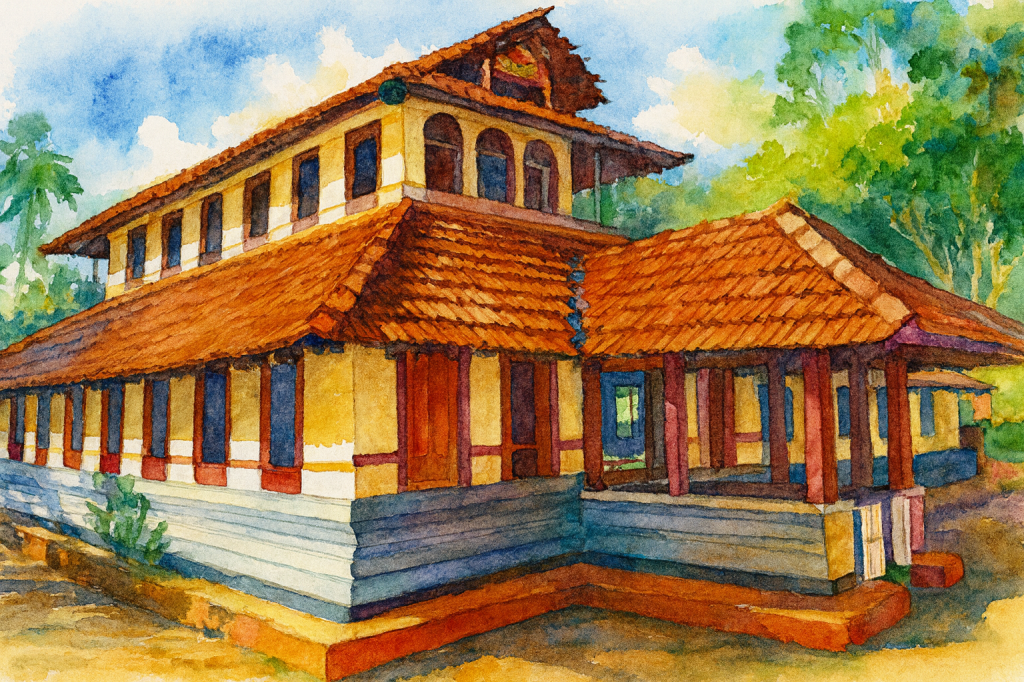
Tucked away in the quiet village of Korome near Mananthavady, the Korome Mosque stands as one of Wayanad’s most graceful reminders of cultural unity and architectural heritage. For over three centuries, this mosque has stood witness to changing times, shifting generations, and evolving landscapes, yet its essence of peace, simplicity, and inclusiveness remains untouched. What sets the Korome Mosque apart from any other mosque in Kerala is its striking resemblance to a traditional Kerala Hindu temple. At first glance, one might mistake its tiered tiled roof, sloping gables, and wooden verandas for those of an ancient temple. This unique architectural style is not accidental, it is a reflection of how deeply interwoven the lives and beliefs of the region’s communities have always been.
Korome once formed part of Thondarnadu, managed by the Thondar Nambiar, under whose generosity the land for the mosque was granted. Though the exact date of construction remains unknown, local tradition attributes the building of the mosque to the Athilian family, who crafted it with devotion, skill, and the support of the local Nair community. This harmony is not just a historical anecdote it is a living tradition. While the mosque remains a place of worship for Muslims, its annual Uroos festival draws people of all faiths, turning the grounds into a vibrant symbol of communal unity. Local Hindus and Christians join Muslims in celebrations, affirming the spiritual brotherhood that the region has cherished for centuries.
Built on a raised platform to protect inhabitants from snakes that once frequented the area, the mosque is a stunning example of Kerala’s classic wooden architecture. Inside, pilgrims and visitors are greeted with: heavy wooden pillars polished by time and touch, intricately crafted ceilings is a testament to the craftsmanship of bygone artisans, two inner chambers separated by massive wooden walls, large and tiny windows designed to invite natural light into the prayer hall, a beautifully adorned pulpit hung with bells which glimmer softly in the filtered light, wooden stairways that show the inventiveness of traditional carpentry. The mosque is also believed to have housed a madarsa on its upper level in earlier times and is said to preserve a rare handwritten manuscript of the Prophet’s sayings, a relic of immense significance.
Today, the Korome Mosque forms an essential part of Wayanad’s pilgrim tourism circuit, along with the ancient Valliyoorkavu Temple and Pallikunnu Church. Together, they narrate a story of Kerala’s spiritual inclusiveness in a land where diverse faiths do not merely coexist but flourish together. For most tourists, Wayanad is known for forests and waterfalls. Yet beyond the misty hills lies this gem of heritage quiet, humble, and profoundly meaningful. A visit to Korome Mosque offers not just a glimpse of architectural elegance but also a heartfelt lesson in the values that shaped Kerala: mutual respect, compassion, and cultural harmony. If you walk through its wooden corridors, inhale the earthy fragrance of old timber, and listen closely, you may feel the whisper of centuries reminding you that faith, when rooted in love, becomes a shelter for all.
 STORIES by HEARITAGE
Leave a comment