At the heart of Mattancherry island in Kochi stands a palace that appears simple at first glance, yet carries within its walls more than five centuries of layered history. Mattancherry Palace, popularly known as the Dutch Palace, is today the most visited museum in Kochi, an enduring symbol of royal life, colonial ambition, and Kerala’s finest mural traditions. Facing the backwaters and surrounded by old trading streets, the palace invites tourists and heritage lovers to step into a time when Kochi stood at the crossroads of global commerce.
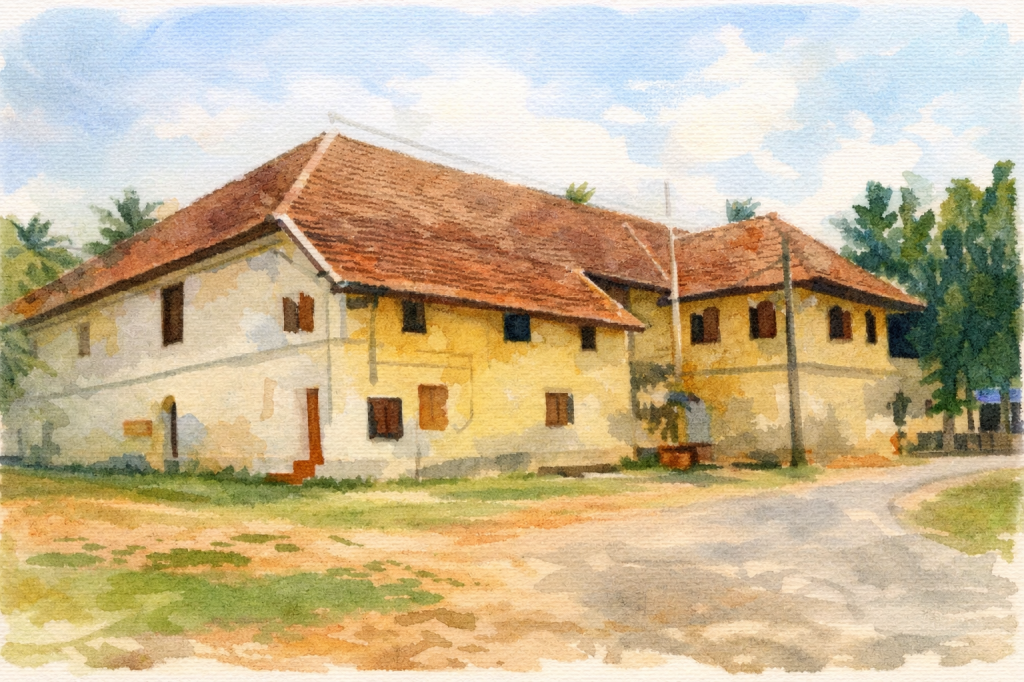
Mattancherry had long been a thriving centre of trade even before Europeans arrived on the Malabar Coast. Jewish merchants settled here centuries ago, and trade in spices, timber, and precious goods flourished. The arrival of Vasco da Gama at the end of the 15th century opened Kerala to direct European contact, drawing Portuguese traders in large numbers. Unlike their strained relations with the Zamorins of Calicut and Arab traders, the Portuguese found a willing ally in the rulers of Cochin. The Cochin Rajas, seeking protection against the Zamorins, welcomed Portuguese support, while the newcomers were keen to establish a secure base for expanding trade. By the mid-16th century, Portuguese influence in Cochin had grown immensely. Trading factories and fortifications gave them economic power that soon overshadowed the local rulers themselves. As resentment grew among the people and concern mounted within the royal court, the Portuguese realised the importance of winning local trust. One narrative suggests that to repair relations possibly after the destruction of a local temple during land clearance, the Portuguese decided to build a grand palace and present it to the Cochin Raja. Another account frames the palace as a diplomatic gesture to cement alliance. Whatever the motive, the result was a remarkable structure: the palace was built and gifted to King Veera Kerala Varma in 1545, making it one of the largest buildings constructed by the Portuguese outside Europe.
Architecturally, Mattancherry Palace is a harmonious blend of indigenous Kerala traditions and European influences. Built on a large quadrangular base, it follows the traditional nalukettu layout with four wings surrounding an open central courtyard. At the heart of this courtyard stands the temple of Pazhayannur Bhagavathy, the royal family deity an inclusion that reinforces the palace’s deep-rooted connection to local belief systems. Later, the Cochin Rajas added temples dedicated to Lord Shiva and Lord Krishna just outside the palace complex. The structure reflects Kerala’s architectural wisdom: sloping terracotta-tiled roofs, wooden staircases, thick walls, small windows, and massive wooden doors designed to suit the tropical climate. At the same time, European-style pillars and arches subtly mark the Portuguese presence. The floors are finished in the traditional Kerala black mirror glaze, achieved by mixing lime, charcoal, and egg whites, while the dining hall ceiling is richly adorned with wooden panels and intricate carvings that reveal the skill of local craftsmen.
In the 17th century, power shifted once again when the Dutch defeated the Portuguese. Under Dutch influence, Cochin entered a new phase of trade and administration. At the request of the Cochin Kings, the Dutch undertook extensive renovations of the palace, adding new quarters and redesigning interiors. Much of the palace’s present form is the result of this period, which is why the structure came to be known as the Dutch Palace, a name later retained by the British when they succeeded the Dutch. The palace briefly fell under the control of Mysore ruler Hyder Ali before eventually passing into British hands. Despite these political upheavals, the Cochin royal family continued to use the palace for ceremonial purposes, including coronations held in the Durbar Hall, until 1951, when it was taken over by the Archaeological Department after Indian Independence.
While the palace architecture reflects centuries of imperial transitions, its greatest treasure lies in its murals. Painted mainly during the 17th and 18th centuries, these murals cover over 100 square metres of wall space and are among the finest examples of Kerala mural art. Executed using natural vegetable pigments, they depict scenes from the Ramayana, Mahabharata, and various Puranic legends. One of the most celebrated compositions illustrates Kumarasambhavam, the epic poem by Kalidasa, rendered with remarkable narrative flow and artistic balance. Other notable murals include the majestic Ananthasayanam of Lord Vishnu reclining on the serpent Adishesha, and Ardhanariswara, symbolising the union of Lord Shiva and Goddess Parvathy. These murals are not merely decorative; they reflect the spiritual worldview of the time, where art, devotion, and royal authority were deeply intertwined. The Coronation Hall is another highlight of the palace, displaying portraits of the Cochin Kings who ascended the throne from 1864 onwards. Alongside these are royal artefacts that bring palace life vividly alive with ceremonial palanquins, swords, shields, spears, daggers, royal gowns, umbrellas, furniture, and gifts received by the rulers over centuries. Together, these exhibits present an intimate glimpse into the daily life, power, and pageantry of the Cochin royal family.
Today, Mattancherry Palace stands as a protected monument, open to visitors with an entry ticket. More than just a museum, it is a layered narrative of trade, diplomacy, colonial ambition, and cultural resilience. For tourists and heritage lovers alike, a visit to Mattancherry Palace is a journey through time where murals speak of gods and epics, corridors echo with royal footsteps, and the story of Kerala’s engagement with the wider world unfolds in quiet dignity.
 STORIES by HEARITAGE
Leave a comment