The tropical forests of Kerala are a living archive of rich and diverse flora, among them stands one tree that has shaped history, livelihoods, and landscapes alike, the teak. Revered as the King of Timbers, teak has for centuries been inseparable from the life of the people of Malabar. This enduring legacy finds its most eloquent expression at Nilambur, home to the renowned Teak Museum, a destination that beautifully blends nature, history, and conservation. For generations, the Malabar coast was celebrated for pioneering shipbuilding traditions. Massive ocean-going vessels were crafted here, drawing traders from Arabia, Europe, and China. The backbone of these ships was teakwood which was valued for its strength, resistance to decay, and longevity. Forests in regions such as Wayanad and Kottayam supplied this prized timber in abundance, making teak central to maritime trade and regional prosperity.
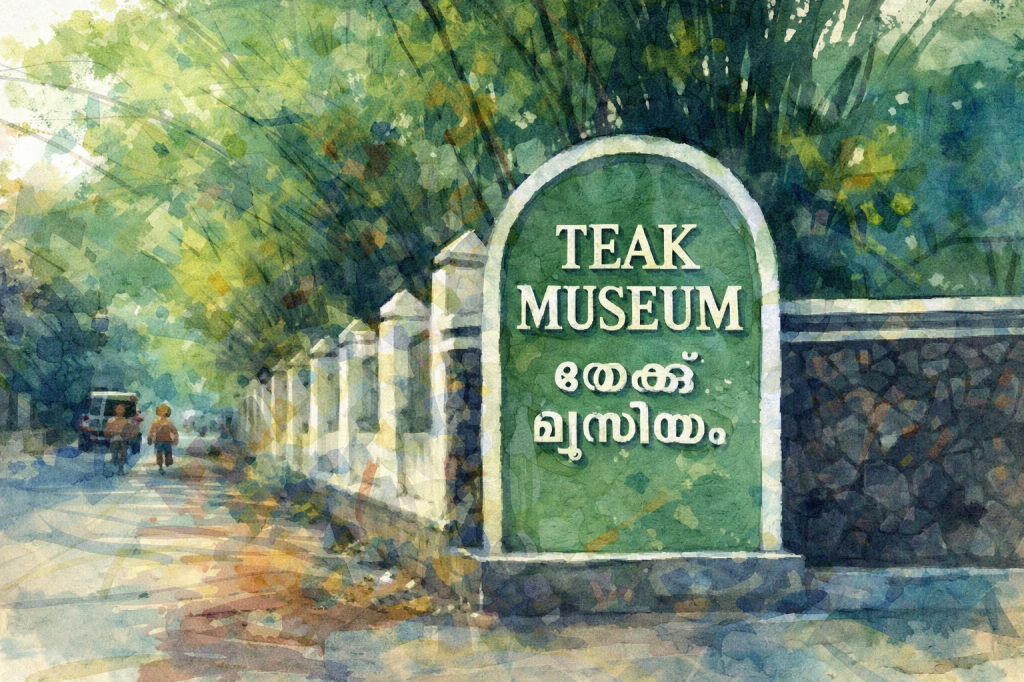
It was in the 19th century that the British administration began to recognize both the economic value and the urgent need to conserve this precious resource. In 1844, the visionary collector Henry Valentine Canolly initiated one of the world’s earliest large-scale teak plantations at Nilambur, assisted by the trusted Chanthu Menon. What may have begun with commercial intent eventually evolved into a landmark experiment in scientific forestry. Decades after Independence, this legacy was formally transformed into a museum in 1995 under the stewardship of the Kerala Forest Research Institute. Today, the Teak Museum stands not merely as a repository of wood specimens, but as a living classroom on conservation. It showcases different species of teak, documents plantation practices, and explains the delicate balance required to sustain forest ecosystems. Over time, the plantation has matured into a thriving habitat for fauna and a nesting ground for migratory birds, making it one of the largest and most successful teak conservation areas in India.
The journey through the museum is also a journey through time. The very word teak is believed to have originated from the Malayalam word thekku, and this linguistic heritage finds resonance in the exhibits. At the museum portico, visitors are greeted by the sprawling root system of a teak tree over fifty years old, offering a striking introduction to the tree’s hidden strength. Among the most captivating displays is a replica of the legendary Kannimara teak over 450 years old from the Nagarampara forest range, along with a translite of the oldest living Kannimara teak from Parambikulam. Another awe-inspiring exhibit is the life-sized trunk replica of an ancient teak from the forests of Malayattoor, which conveys the sheer grandeur of these forest monarchs.
Scattered across the plantation are living witnesses to history, including a teak tree believed to be over 160 years old, planted during Canolly’s tenure. Walking through the shaded avenues beneath towering trees is a serene experience, enriched by vivid flora, reptiles basking in the undergrowth, and the gentle sounds of the forest. A hanging bridge over a forest stream adds to the charm, inviting visitors to slow down and immerse themselves in nature. Each tree is carefully documented, turning every walk into a lesson in botany and history. The museum’s educational exhibits further enhance its value. Paintings and archival photographs depict the early days of the plantation, saplings being planted, timber samples collected, and traditional tools used for harvesting. One particularly intriguing detail is the deliberate absence of bamboo within the plantation, a precaution taken by the British to reduce the risk of forest fires. Together, these insights make the museum a comprehensive guidebook for students, researchers, and environmental enthusiasts alike.
A visit to the Teak Museum is more than a sightseeing experience, it is an encounter with Kerala’s environmental wisdom and historical foresight. Standing among these stately trees, one truly understands why teak reigns supreme as the King of Timbers. For anyone visiting Nilambur, this living forest-museum is not just recommended; it is essential.
 STORIES by HEARITAGE
Leave a comment