The history of Kerala’s princely states is a tapestry of alliances, conflicts, and quiet statesmanship, and few families have left a mark as deep as the Paliam family of Cochin. From the early 17th century until the dawn of the 19th century, the Kingdom of Cochin rose, endured, and prospered largely due to the wisdom and administrative acumen of the Paliath Achans who were the hereditary Prime Ministers to the Cochin Rajahs. For over two centuries, the Paliam family stood just below the throne in power and wealth, shaping the destiny of the kingdom from behind the scenes. At the heart of this legacy stands the majestic Paliam Kovilakam, part of the larger Paliam complex near Chendamangalam. More than a historic residence, the Kovilakam is a living chronicle of loyalty, diplomacy, and architectural brilliance. Originally known as the Paliam Tharavadu, this structure served as the residence of the senior male members of the family, in keeping with the social customs of the time. Women lived separately, and the tharavadu symbolized authority, lineage, and governance.
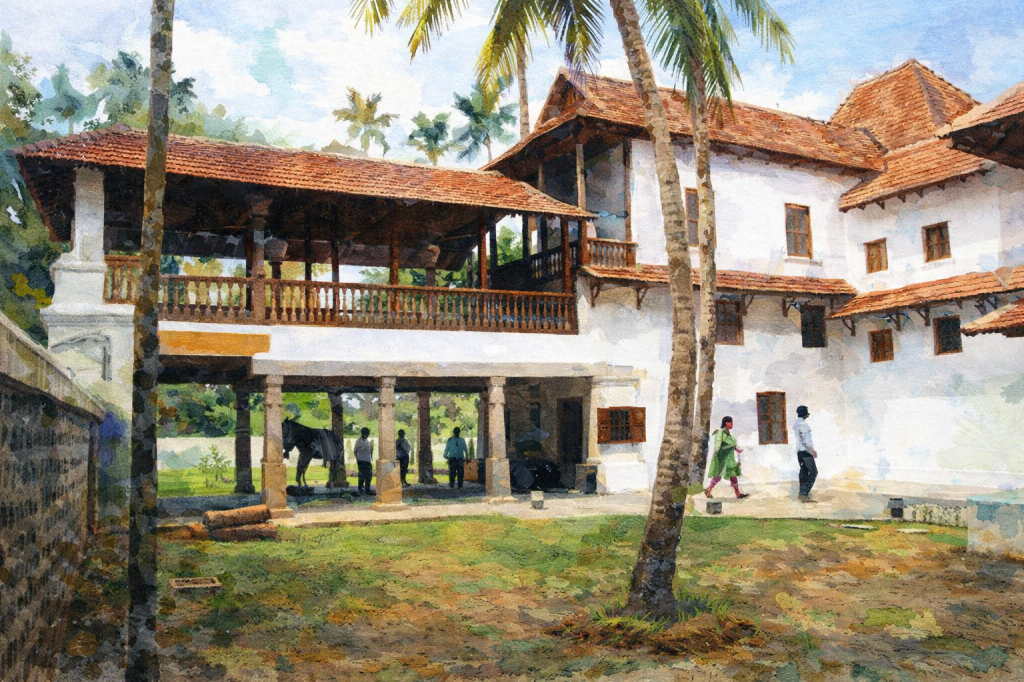
The transformation of this tharavadu into a Kovilakam to a palace was born out of crisis and devotion. During the 16th century, the Portuguese tightened their grip on the Cochin coast, threatening trade routes, intimidating Jewish settlers, and undermining the authority of the Kingdom of Cochin. Unable to counter these threats alone, the Cochin Raja sought refuge with the Paliath Achan. It is believed that the Raja was hidden within the tharavadu and, for a brief period, ruled incognito from here before being escorted safely to Chendamangalam. This act of loyalty elevated the residence to royal status, earning it the name Paliam Kovilakam. Equally remarkable within the complex is the Paliam Nalukettu, the residence of the matriarch and the extended family. Built in the traditional Kerala architectural style, this self-contained two-storeyed structure is among the finest surviving examples of aristocratic domestic architecture in the state. With a spacious central courtyard, pillared corridors, eight bedrooms, and a vast kitchen, the Nalukettu reflects both grandeur and practicality. Features such as the poomukham (pillared entrance), concealed ara (vault) with a secret exit, and the karnasutram which is a precise architectural device designed to channel natural airflow demonstrate the advanced application of Vastu principles. Temples dedicated to Lord Vishnu, Lord Shiva, and the ancestral goddess of the Cochin kingdom further sanctify the complex.
The rise of the Paliam family began around 450 years ago when they migrated from Vanneri to Chendamangalam. Their intellect, strategic thinking, and close rapport with the people soon earned them the trust of the Cochin Rajahs. Over time, the Paliath Achan became the chief intermediary between the ruler and the public, often seen by commoners as the true face of governance. This period was marked by constant challenges with rivalry with the Zamorins of Malabar, pressure from the Travancore kingdom in the south, and increasing European intervention. Amid these tensions, the Paliath Achans displayed remarkable diplomatic foresight. Viewing the Portuguese as aggressive and exploitative, they aligned instead with the Dutch, who were perceived as more pragmatic traders. Through careful negotiation, the Paliam family helped the Dutch dislodge the Portuguese from Cochin, reshaping the region’s political and commercial landscape. In recognition of this alliance, the Dutch undertook the reconstruction of the Paliam Tharavadu, giving rise to the present Kovilakam which is a harmonious blend of Dutch and Kerala architectural styles. Thick walls, high ceilings, large rooms, minimal ornamentation, and excellent ventilation created interiors that were cool, functional, and dignified.
The Kovilakam also served as a space of governance and public interaction. Its prasanga peedam, a raised gallery at the front, was used by the Paliath Achan to address the people directly—an early symbol of accessible administration. In 1786, the building was expanded to accommodate women and children, reflecting the family’s progressive outlook and emphasis on inclusive living, a value that further strengthened their social standing. The narrative of Kerala’s history would be incomplete without acknowledging the Paliam family’s contributions. They served successive Cochin Rajahs until the reign of Sakthan Thampuran, whose administrative reforms shifted the capital to Thrissur and centralized power, thereby reducing the influence of feudal elites, including the Paliath Achans. By the end of the 18th century, the family’s political dominance had faded, and they became prominent landlords rather than power brokers. Yet their legacy of prosperity, diplomacy, and enlightened governance—remained firmly etched in the history of Cochin.
Today, Paliam Kovilakam invites tourists and history enthusiasts to step into this layered past. Preserved as a heritage site and included in the Muziris Heritage Project, the Kovilakam showcases rare artefacts, architectural elegance, and stories of a family that once stood at the crossroads of Kerala’s political destiny. A visit here is not just an architectural delight, but a journey into the corridors of power that quietly shaped the fortunes of an entire kingdom.
 STORIES by HEARITAGE
Leave a comment