In a land like Kerala, water has always been more than a natural resource, it is a lifeline. Rivers, backwaters, and lakes form a living network that has sustained trade, agriculture, and culture for centuries. Yet amid this naturally gifted geography, one artificial waterway stands out as a remarkable feat of 19th-century engineering and administrative vision: the Connolly Canal. Flowing through the heart of Kozhikode, the canal is inseparable from the life and legacy of Henry Valentine Connolly, one of the most enterprising administrators Malabar ever witnessed.
For centuries before British rule, Kozhikode thrived as a global trading port under the Zamorins. Arab, Chinese, and later European merchants anchored here, drawn by spices, timber, and textiles. By the early 19th century, however, this prosperity had begun to wane. The arrival of the British, the decline of overseas traders, and shifting political control left Malabar economically fragile. Kozhikode had become strategically boxed in by French influence to the north, Mysore’s shadow in the east, and Dutch power to the south. Sea routes were unreliable for nearly a third of the year, and overland transport was slow and expensive. It was in this context that Connolly’s vision took shape. Appointed Collector of Malabar in 1840, he inherited a region struggling to adapt to changing trade realities. Connolly understood that Malabar’s revival lay not only in the sea but in its hinterland. An inland waterway, he believed, could connect rivers, farmlands, forests, and markets into a single economic corridor.
In July 1845, Connolly wrote to Arthur Cotton, outlining his proposal for a canal system that would benefit the Company “even if it did nothing else good in the future.” The idea was ambitious: a canal linking the Kuttiyadi River, Korapuzha River, and Chaliyar River, running from Vadakara to Kozhikode. This single corridor would allow small farmers to transport produce directly to larger markets, freeing them from dependence on middlemen. The canal was later extended southward in a masterstroke of economic planning. By connecting to the Kadalundi River and eventually the Periyar River, Connolly created a continuous inland route that linked timber forests, fertile plains, and port towns. The stretch connecting Kallai with Tirur became especially important, transforming the region into a thriving timber and agricultural belt. Mangroves flourished along the canal, new ecosystems emerged, and towns such as Beypore and Tanur gained renewed commercial importance. The final extension to Kodungallur was completed after Connolly’s death under his successor Robinson, making it one of the longest canal systems in the region.
Understanding the canal’s importance requires understanding Malabar’s economy. Spices came from Wayanad, grain from the southern plains, timber from the eastern forests, and textiles from the north. Transporting these goods over rough roads was slow and costly. Water, on the other hand, was cheap, efficient, and abundant. Connolly’s insight was particularly sharp when it came to timber. In 1844, he had already initiated the Nilambur Teak Plantation, the world’s oldest teak plantation. Teak logs could float naturally, and Connolly realised they could be guided along canals straight to the mills at Kallai and Feroke. Soon, timber merchants established sawmills along the canal banks, turning Kozhikode into a major timber-processing hub. The project was officially sanctioned in 1846, with construction beginning in 1848. Built entirely by human labour, the canal was completed in stages, with stone embankments, dimensioned rocks, and small bridges allowing road traffic to pass overhead. By 1850, the canal had already transformed local life. Settlements such as Eranhipalam, Nadakkavu, Arayidathupalam, Challapuram, and Kallai flourished. Valiyangadi grew into a bustling wholesale market as boats carrying rice and wheat arrived daily along the Chaliyar.
Land acquisition often the greatest obstacle to such projects was overcome through Connolly’s diplomacy. Zamorins and feudal landlords willingly donated land on the condition that canal water could be used for irrigation and that saltwater intrusion would be prevented by bunds. Though unwritten, this understanding shaped the canal’s future. The first mud bund was built near present-day Puthiyara, but the lack of long-term maintenance later contributed to silting, narrowing, and eventual decline of the canal.
Connolly’s popularity among the people, however, also placed him at the centre of political unrest. After the Manjeri Revolt of 1849, the British blamed the influential Islamic cleric Fazal Pookoya Thangal for inciting resistance. Connolly supported his exile from Malabar, a decision that deeply angered sections of the Mappila community. Years of resentment culminated on 11 September 1855, when Connolly was assassinated at his residence. The event shocked the British administration; Connolly was widely regarded as an able and humane officer. He was accorded a state funeral, and his remains were cremated near the beach at what is today Connolly Park. Despite his tragic end, Connolly’s legacy endured. His successor Robinson completed the canal extensions, while later Collector William Logan recognised its importance by aligning the Kozhikode railway station near the canal’s Robinson Canal stretch.
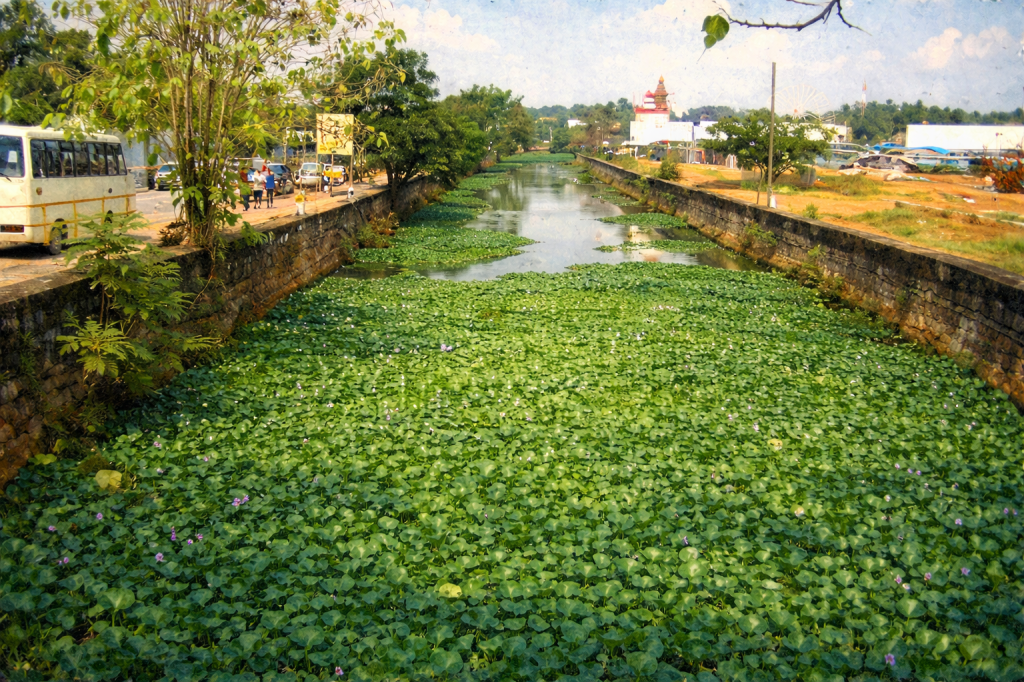
Today, the Connolly Canal is but a fragment of its former self free-flowing in places, choked with water hyacinths in others, vanished entirely in some stretches. Yet even in its diminished state, it remains one of Malabar’s most powerful symbols of visionary planning. More than a canal, it represents a time when infrastructure was built not merely for control, but for connectivity and shared prosperity. Preserving what remains of this waterway is not just an act of conservation, it is a tribute to the enduring vision of Henry Valentine Connolly, who once imagined Malabar flowing together as one.
 STORIES by HEARITAGE
Leave a comment