Kerala has always been a land of refuge, a place where faiths arriving from distant shores were not only tolerated but embraced. Among the many communities that found safety and dignity here, the Jews hold a special place in the cultural memory of the region. Long before Christian missionaries set foot on the Malabar Coast, Jewish traders are believed to have arrived in Kerala seeking freedom from persecution and opportunities for honest trade. Their integrity, commercial acumen and ability to live harmoniously with local communities earned them the respect of rulers and common people alike. Standing today as a powerful testament to this legacy is the Paravur Synagogue, one of the oldest synagogues in the Commonwealth and among the most historically significant Jewish monuments in India.
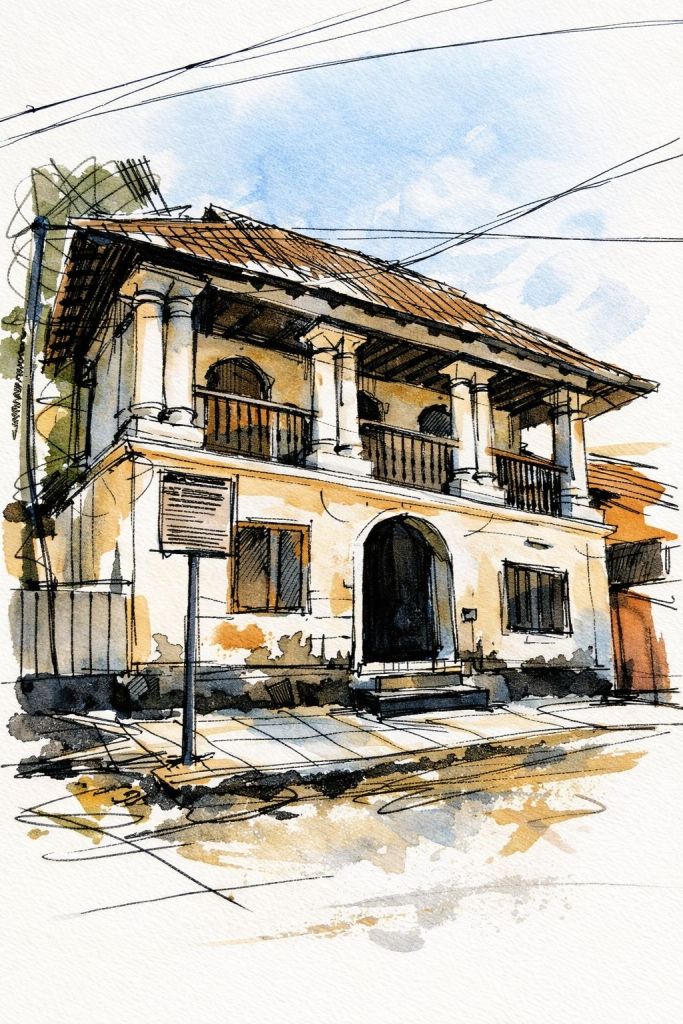
The Jews who settled along the Malabar Coast came to be known as Malabar Jews or Black Jews distinguishing them from later Jewish settlers. Their earliest settlements were around the ancient port of Kodungallur (Muziris), a thriving hub of global trade. Over centuries as trade networks expanded and political circumstances changed, Jewish families moved northwards to places such as Chendamangalam and Paravur. These coastal towns offered both commercial promise and royal protection under the Chera and later Cochin rulers. Paravur gradually emerged as a prominent Jewish settlement with its bustling market area serving as a centre of trade and social life. The synagogue here became the spiritual and cultural anchor of the community.
According to community tradition, the Paravur Synagogue was formally rebuilt in 1616 AD though historical evidence suggests that an earlier structure may have existed on the site as early as the 10th or 11th century. This layered history makes the synagogue not just a religious building but a storybook of centuries of Jewish presence in Kerala. Architecturally, the synagogue is exceptional among Indian synagogues for its scale and openness. Built using laterite stone, timber and lime plaster, it harmoniously blends Jewish liturgical requirements with traditional Kerala architectural elements. The synagogue’s entrance is marked by a grand padippura which is a gateway structure common in feudal Kerala houses. This padippura once housed storerooms for trade goods and served as a guest area, reflecting the close connection between commerce and community life.
A distinctive feature of the Paravur Synagogue is its separate access for women worshippers. A steep external staircase from the padippura leads to the upper gallery allowing women to enter directly into their designated prayer space. This upper gallery, with its finely carved wooden balustrades, overlooks the main prayer hall below. Inside, the synagogue unfolds into a vast central hall supported by pillars, leading the eye towards the eastern wall where the Holy Ark (Heichal) once stood. The wooden ceiling richly carved with floral and geometric motifs reflects the craftsmanship of local artisans. The Bimah, a raised wooden pulpit used for Torah readings, occupied the centre of the hall, reinforcing the communal nature of Jewish worship.
Though the Jews of Kerala enjoyed long periods of royal patronage particularly under the Cochin kings, their history was not free from turmoil. European colonial powers brought religious intolerance along with political ambition. The Portuguese, in particular were hostile to Jewish communities and are believed to have set fire to the Paravur Synagogue during their campaigns along the Malabar Coast. The subsequent rulers did little to spare the structure as the synagogue suffered further damage during the Dutch period and was again burnt during Tipu Sultan’s invasion of Cochin in the 18th century. Yet, in keeping with the resilient spirit of the community, the Jews rebuilt their place of worship time and again, restoring it to functionality after each devastation. For nearly six centuries, Jewish life continued to flourish around the synagogue with generations born, married and buried in Paravur.
The most profound change came not through invasion but through hope. With the establishment of the State of Israel in 1948, Jews across the world felt the call to return to their ancestral homeland. This mass migration known as Aliyah reached Kerala in the 1950s. Family after family left Paravur, carrying with them memories, prayers, and sacred objects. By 1996, the synagogue could no longer gather a minyan which is the quorum of ten adult Jewish men required for communal prayer. Daily worship ceased and the synagogue fell silent. In 1990, the synagogue’s original Bimah and Holy Ark were carefully dismantled and transported to Israel. The final symbolic departure came in 1995, when the Torah Ark itself left Paravur, marking the end of an active Jewish congregation that once numbered over 300 families.
Recognising its immense heritage value, the Paravur Synagogue was handed over to the Government of Kerala in 2009. Today, it functions as the Kerala Jewish History Museum maintained under the Muziris Heritage Project, a joint effort of the state’s tourism and archaeology departments. The museum allows visitors to step into the world of Kerala’s Jews. Among its most significant exhibits are replicas of the ancient copper plates issued in the 10th century by the Chera king Bhaskara Ravi Varman to Joseph Rabban granting Jews extraordinary privileges. These included rights equal to local feudal lords like ceremonial honours, trade autonomy and social status underscoring the esteem in which Jews were held in medieval Kerala.
The story of the Paravur Synagogue is ultimately a story of belonging. It tells of a community that arrived as strangers & became integral to the land and contributed richly to its social and economic fabric, only to depart centuries later in search of another promised home. Today, though no prayers rise from its halls, the Paravur Synagogue remains profoundly alive. Its walls speak of trust between cultures, of coexistence without conflict and of a time when faith and commerce walked hand in hand. To visit this synagogue is not merely to explore a monument, but to encounter the soul of Kerala’s Jewish past which was quiet, dignified, and unforgettable.
 STORIES by HEARITAGE
Leave a comment