On the sacred banks of the gentle Bharathapuzha River stands the ancient Navamukunda Temple. Revered as one among the 108 Divya Desams of Lord Vishnu, this shrine is not merely a temple of stone and wood; it is a living tapestry woven from mythology, devotion and the timeless rhythm of the river. Known locally as Thirunavaya, it is a place where legend breathes through every breeze and the past feels close enough to touch.
The name Thirunavaya springs from sacred lore. According to tradition it derives from Thiru–Nava–Yogi “the holy nine sages.” Myth recounts that King Rishabha, a descendant of Lord Rama had nine sons who were ardent devotees of Lord Vishnu. During their pilgrimage they discovered nine sacred salagramas in the Gandaki River which are divine stones believed to embody Vishnu himself. Guided by a vision, the yogis journeyed south and reached the tranquil grove along the Bharathapuzha. One by one they consecrated their salagramas there, yet each stone mysteriously sank into the earth. When the youngest brother placed his, he clasped it in prayer as it began to descend and it halted halfway. That half-sunken stone became the idol of Navamukunda, the Vishnu consecrated by nine sages. Even today, devotees believe the deity’s feet remain embedded in the earth, a sign that the Lord chose this soil as his eternal abode.
Unlike most temples, Thirunavaya has no temple pond instead all sacred water is drawn directly from the Bharathapuzha which devotees regard as equal in sanctity to the Ganges. The riverbank serves as a vast natural altar where ancestral rites are performed. For generations, families have come here to offer prayers for departed souls believing the sacred sands carry their blessings onward to eternity. The river’s presence shapes the entire spiritual atmosphere. At dawn, priests collect water in brass vessels while conch shells echo across the shore; at dusk, oil lamps flicker against the flowing current, turning the river into a ribbon of liquid gold.
The temple’s mythology deepens with another revered legend with that of Parashurama, the warrior-sage credited with reclaiming Kerala from the sea once visited this very shrine to atone for his sins. Pilgrims therefore believe prayers offered here carry a special power of purification. Outside the temple stands an ancient banyan tree whose roots curl like time itself. Local lore says it witnessed the arrival of sages and kings alike, silently blessing each generation that sought shelter beneath its shade.
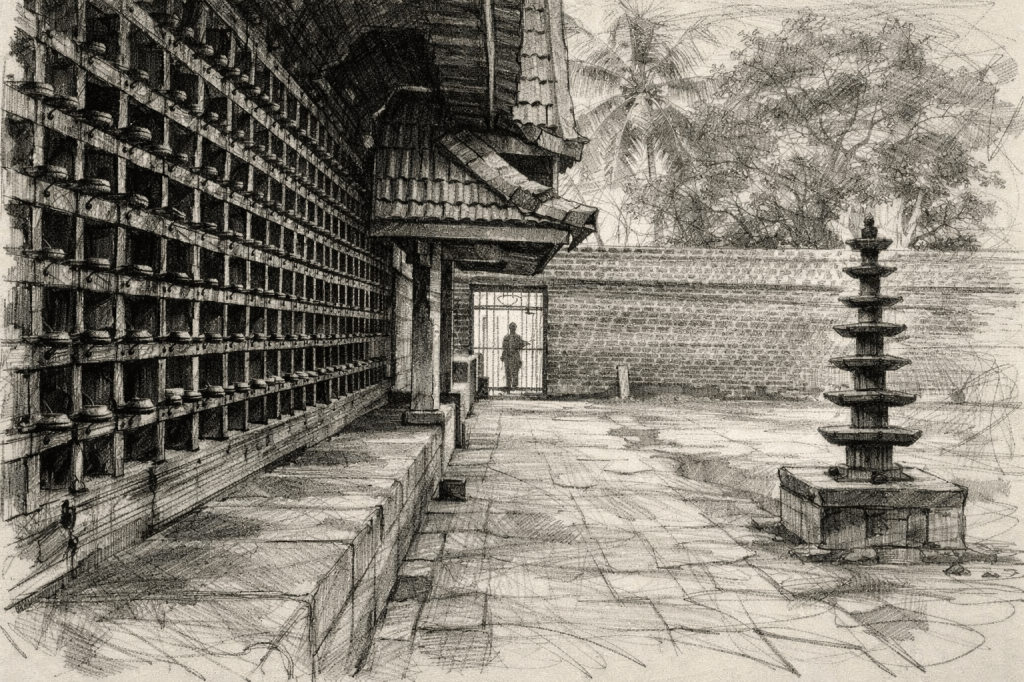
The temple’s design reflects classic Kerala architecture which is understated yet profoundly graceful. The complex includes a square sreekovil (sanctum) housing the half-embedded idol, a namaskara mandapam for rituals, sub-shrines, sopanam steps and feeding hall (oottupura) to complete the complex. Tradition credits the legendary master craftsman Perumthachan with reconstructing the shrine under the patronage of local rulers. Folklore says that when the structure once tilted slightly, he inserted his chisel into a stone crevice to steady it and that chisel is still shown embedded in the wall, a symbol of divine engineering.
Thirunavaya’s mythology does not rest with its origin alone. The temple holds several unusual features tied to local belief. A sacred Nandi stands within the premises, an uncommon sight in a Vishnu temple. Devotees whisper wishes into its ears, believing it carries their prayers to the divine. Another is a prominent image of Ganesha stands near the sanctum not merely as a subsidiary deity but as a guardian. Legend says Ganesha once competed with Goddess Lakshmi in offering lotus flowers to Vishnu. To console him, the Lord seated Lakshmi permanently beside him so Ganesha could continue his offerings explaining her presence beside Vishnu in many temples. Such stories, told softly by priests and elders, give the temple an atmosphere where mythology feels less like legend and more like memory.
Beyond myth, Thirunavaya also played a central role in Kerala’s medieval history. The temple grounds once overlooked the famed Mamankam Festival, a grand assembly held every twelve years that drew rulers, warriors and traders from across the land. After the Chera dynasty faded, the festival became a stage for political rivalry, especially between regional kings and the Zamorin rulers of Calicut. Even after the festival ceased in the 17th century, the Zamorin retained ceremonial rights over temple rituals, a tradition that symbolically continues today.
The half-sunken idol speaks of divine choice, the banyan tree whispers of sages and the river carries prayers from generation to generation. To visit Navamukunda Temple is to step into a sacred dialogue between earth and eternity. It is a place where devotion flows like the Bharathapuzha itself with gentle, ancient and endlessly renewing.
 STORIES by HEARITAGE
Leave a comment