In the cultural heart of Thiruvananthapuram where every avenues breathe history and art mingles effortlessly with everyday life, rises the graceful silhouette of Kanakakunnu Palace. Standing atop a gentle hill beside the historic museum complex, this elegant red-hued palace is more than an architectural landmark, it is a living memory of Travancore’s refined royal vision, colonial encounters and Kerala’s vibrant cultural renaissance.
The story of Kanakakunnu begins in the reign of Sri Moolam Thirunal Rama Varma who ruled Travancore from 1885 to 1924. His era was one of transition, the British Empire held authority, yet Travancore retained internal autonomy and a progressive administrative spirit. Unlike rulers who spent lavishly on personal luxuries, Sri Moolam Thirunal devoted state resources to public welfare and institutional reform. He established the first legislative assembly in India in 1888, introduced progressive legal and administrative reforms, promoted paper documentation over palm-leaf records and modernized infrastructure including early public transport initiatives. Yet his vision extended beyond governance as he believed culture and diplomacy were as vital as policy.
With European dignitaries, scholars and officials increasingly visiting Travancore, the royal court needed a venue suited for formal receptions and grand gatherings. The existing royal residence at Kowdiar Palace, steeped in traditional customs and strict vegetarian hospitality could not accommodate all diplomatic expectations. Thus was conceived Kanakakunnu, a palace built not for residence but for reception.
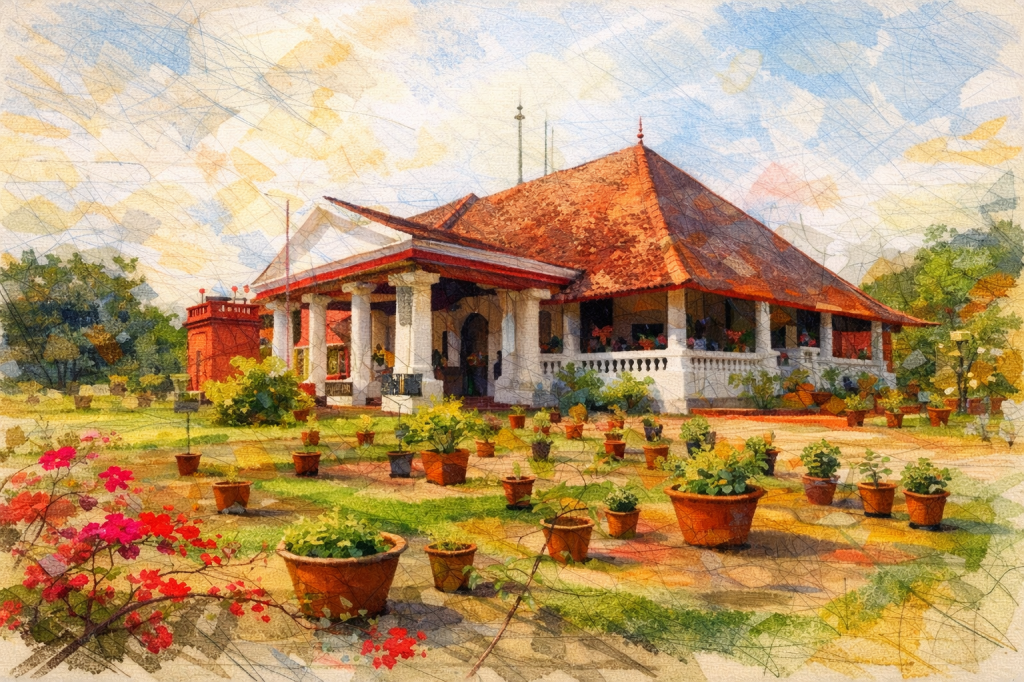
Engineers and planners selected a scenic hill near the museum grounds as the ideal site. Elevated yet centrally located, it offered both prestige and convenience. From its crest, the palace overlooks lush lawns and avenues, forming a natural citadel of elegance. Constructed in the early 20th century, the palace was designed as a harmonious blend of Kerala and European styles. Its exterior reflects the simplicity and symmetry of traditional Kerala architecture while the interiors reveal colonial influences with ornate plasterwork, polished wooden panels, and tall French windows that flood the halls with light. Laterite stones quarried from the very hill beneath were used for construction, giving the palace its distinctive reddish tone which is a colour that glows warmly at sunset and visually connects it with nearby heritage buildings like the museum complex.
Unlike defensive palaces or administrative forts, Kanakakunnu was envisioned as a venue of hospitality and culture. Wide verandas stretch along its façade, opening into expansive halls meant for banquets, assemblies, and performances. The linear layout allows crowds to move freely, reflecting the palace’s original purpose as a gathering space for distinguished guests. The landscaped grounds surrounding the palace were as carefully planned as the structure itself. Gardens, pathways and lawns created a setting suitable for open-air receptions and performances that became an early example of architectural landscaping in Kerala’s royal complexes. One unusual historical detail illustrates the palace’s diplomatic role: while Travancore’s royal kitchens were strictly vegetarian, Kanakakunnu was granted special permission to serve meat and fish dishes exclusively for foreign guests. This thoughtful accommodation symbolized the kingdom’s ability to respect tradition while embracing global interaction.
Over time, Kanakakunnu became the social heart of the city with British administrators hosted formal gatherings here, Travancore rulers organized cultural events and visiting dignitaries experienced Kerala’s hospitality within its elegant halls. Later monarchs even used it as a summer retreat, enjoying its breezy hilltop climate and serene surroundings. After India’s independence, the palace passed into government care but continued to serve its original purpose which was hosting important public events, exhibitions and festivals. Today, though visitors cannot freely enter its interior halls, the palace grounds remain open allowing travellers to stroll through its gardens and absorb its regal ambience. Within the complex stands the famed Nishagandhi Amphitheatre, a modern addition that has hosted renowned musicians, dancers and cultural festivals. During major events, the palace forms a majestic backdrop, its illuminated façade lending an almost theatrical grandeur to performances beneath the night sky.
True to its name Kanaka Kunnu meaning “Golden Hill”, the palace remains one of Thiruvananthapuram’s brightest cultural jewels. It embodies the refined aesthetics of Travancore royalty, the diplomacy of a princely state navigating colonial realities, and the enduring artistic spirit of Kerala. For travellers, historians and dreamers alike, a walk through its grounds is a journey across centuries, from royal receptions to modern festivals, from imperial diplomacy to artistic celebration where one understands why this hilltop palace still reigns as one of the city’s most cherished landmarks.
 STORIES by HEARITAGE
Leave a comment